Airdrop Scam Checker
Based on the article "TENFI Airdrop by TEN: What We Know and What to Watch For", this tool helps you identify legitimate airdrops using key indicators from the article. Remember: real airdrops never ask for payment or early wallet connections.
There’s no official confirmation yet that a TENFI airdrop by TEN is happening. No whitepaper, no website, no Twitter announcement from a verified account. If you’ve seen a post saying ‘Join the TENFI airdrop now!’-it’s likely a scam. Crypto airdrops are popular, but they’re also one of the most exploited tricks in the space. Scammers create fake tokens with names that sound like real projects, then lure people into connecting wallets or paying gas fees to ‘claim’ something that doesn’t exist.
What is TENFI supposed to be?
TENFI is not listed on CoinMarketCap, CoinGecko, or any major exchange. There are no blockchain explorers showing a contract address tied to TENFI. No GitHub repository. No team members named publicly. That’s not how legitimate projects launch. Real crypto projects-like Arbitrum, Polygon, or Solana-publish their tech details before they even think about an airdrop. They show code, they explain tokenomics, they hire auditors. TENFI doesn’t do any of that.
The name ‘TEN’ might be trying to sound like ‘TEN Network’ or ‘TEN Protocol’, but those are unrelated. There’s no known entity called ‘TEN’ in crypto that’s planning a TENFI token. The lack of any verifiable source is the biggest red flag. If you can’t find a single credible article from CoinDesk, The Block, or Decrypt about TENFI, then it’s not real. Not yet. Maybe never.
How do fake airdrops work?
Fake airdrops follow a simple pattern. First, they create a website that looks professional-clean design, fancy graphics, fake testimonials. Then they ask you to connect your wallet. That’s step one. Step two? They ask you to sign a transaction. It might say something like ‘Approve TENFI token access’ or ‘Confirm your eligibility’. That transaction doesn’t just let them send you tokens. It gives them full control over everything in your wallet-your ETH, your NFTs, your stablecoins.
Once you sign, they drain your funds in seconds. No warning. No refund. No way to reverse it. In 2024, over $180 million was stolen through fake airdrop scams, according to Chainalysis. Most of those victims thought they were getting free crypto. Instead, they lost their life savings.
How to tell if an airdrop is real
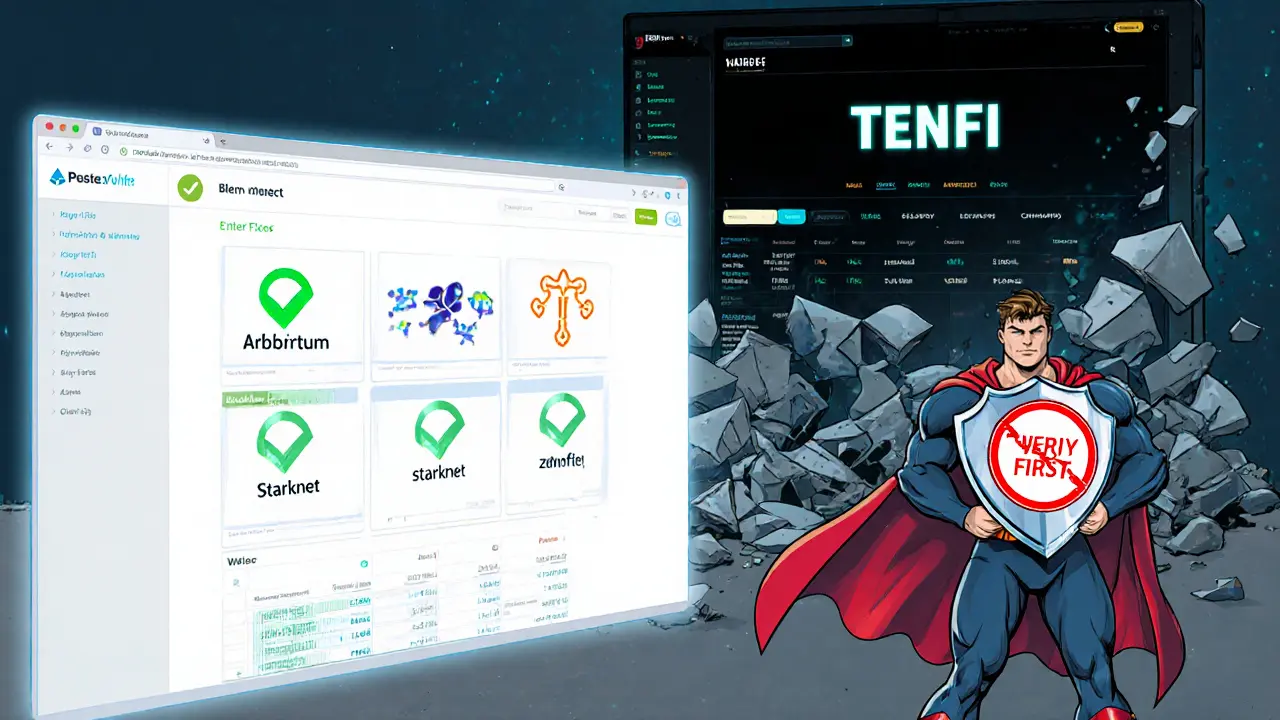
Real airdrops don’t ask you to connect your wallet before the official announcement. They don’t ask you to pay anything. They don’t pressure you with countdown timers. Here’s what a real airdrop looks like:
- Announced on the project’s official website, not a Telegram group
- Published in a blog post with a clear eligibility timeline
- Verified by multiple independent crypto news outlets
- Requires no wallet connection until after the snapshot date
- Lists exact token amount, distribution schedule, and vesting terms
If you’re asked to send crypto to ‘unlock’ your airdrop, that’s a scam. If you’re told to ‘deposit’ to get in, that’s a scam. If the site uses .xyz or .top domains instead of .com, that’s a scam. These aren’t guesses-they’re proven patterns.
What to do if you already connected your wallet
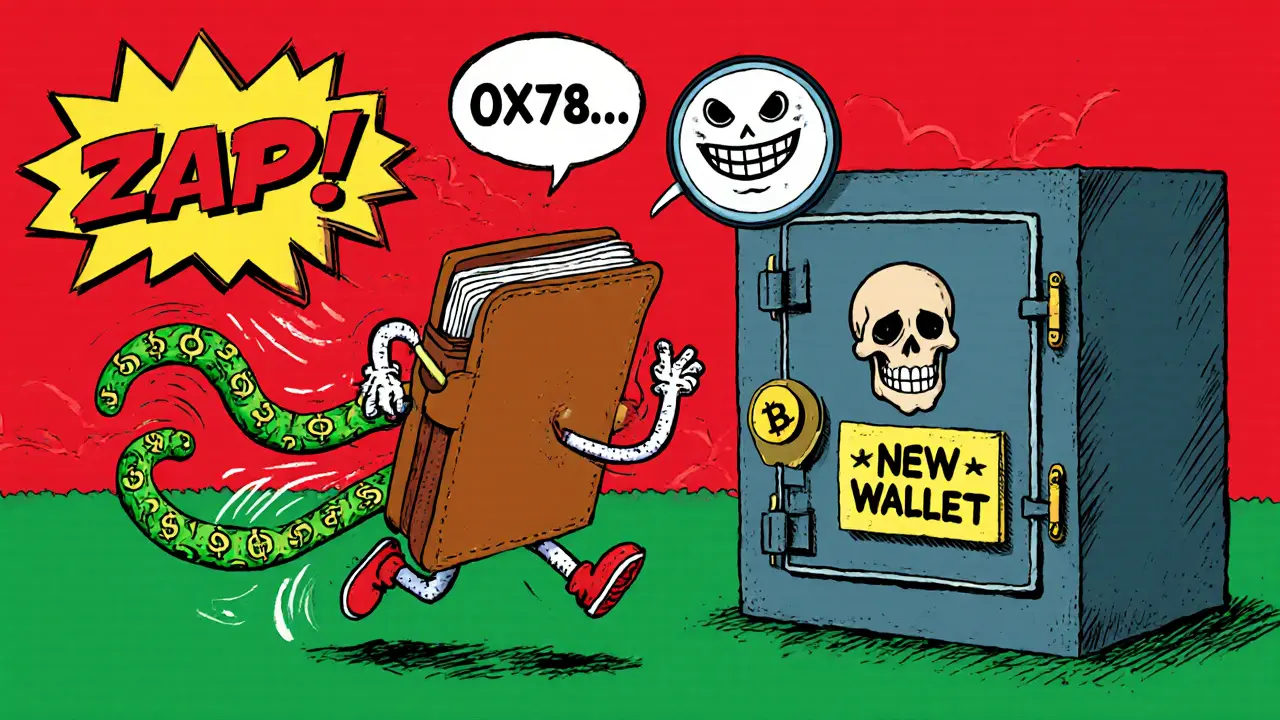
If you’ve already signed a transaction for TENFI or any other unknown airdrop, act fast. First, stop using that wallet. Move all your assets to a new one. Use a hardware wallet if you have one. Then, check the transaction on Etherscan or another blockchain explorer. Look for the contract address. If it’s a long string of letters and numbers with no name attached-like 0x7a8...b3f-it’s likely malicious.
Some wallets, like MetaMask, let you block specific contracts. Go to Settings > Security & Privacy > Block Contract. Paste the address and block it. That won’t get your money back, but it stops future attacks. And never use the same wallet again for any airdrop unless you’re 100% sure it’s real.
Legit airdrops to watch in 2025
If you’re looking for real airdrops, focus on projects that are already live and have traction. In 2025, these are the ones analysts are watching:
- Arbitrum Orbit chains - Projects built on Arbitrum’s new scaling tech often reward early users.
- Worldcoin - Still rolling out globally; users who verify with Orb may qualify.
- Starknet - Active user base, frequent airdrops for DeFi and NFT activity.
- LayerZero - Cross-chain protocol with history of rewarding users across chains.
- zkSync Era - Regular airdrops for users who swap, bridge, or use dApps.
These projects have public teams, audited code, and years of track record. They don’t need to trick you into giving up your wallet to prove they’re real.
Final warning: Don’t chase free crypto
The biggest mistake people make is thinking ‘I’ll just try it-what’s the risk?’ The risk is everything. Your wallet holds your digital identity. Once a scammer gets in, they can empty it in under 30 seconds. No one will help you get it back. No government agency will reverse it. No exchange will refund you.
If TENFI is real, it will announce itself through official channels. It will have a website with a .com domain. It will have a team with LinkedIn profiles. It will have a GitHub repo with commits. It will be covered by CoinDesk. Until then, treat it like a virus. Avoid it. Block it. Ignore it.
Free crypto doesn’t exist. Not really. What exists is people who want your money-and they’re getting better at pretending they’re giving you something.
Is TENFI a real crypto project?
No, TENFI is not a real crypto project as of November 2025. There is no official website, no blockchain contract, no team, and no verified announcement. All claims about a TENFI airdrop are scams designed to steal crypto from your wallet.
How do I check if an airdrop is real?
Look for an official website with a .com domain, a published whitepaper, a verified team on LinkedIn, and coverage from trusted sources like CoinDesk or The Block. Real airdrops never ask you to connect your wallet before an official announcement or pay any fees to participate.
Can I get my money back if I connected my wallet to TENFI?
No, once you sign a malicious transaction, your funds are gone permanently. Blockchain transactions are irreversible. Your only option is to stop using that wallet, move all remaining assets to a new one, and block the scam contract to prevent future attacks.
Why do scammers use names like TENFI?
Scammers use names that sound similar to real projects to trick people into thinking they’re legitimate. TENFI mimics the naming style of real tokens like $FLOKI or $PEPE. It’s a psychological trick-people see something familiar and lower their guard. Always verify the source, not just the name.
What should I do if I see a TENFI airdrop on Telegram or Twitter?
Don’t click any links. Don’t reply. Don’t even engage. Report the account as a scam. Then, warn others in the community. Fake airdrops spread fast through social media because they prey on FOMO. The best defense is awareness and silence.



SHASHI SHEKHAR
November 27, 2025 AT 03:48Bro this TENFI thing is wild 😳 I just saw a Telegram group with 20k members all claiming they got the airdrop link - but the site uses .xyz and asks you to connect your wallet to ‘verify eligibility’ 🤡 I checked the contract on Etherscan - 0x7a8...b3f - zero code, zero history, just a blank contract waiting to drain wallets. Real airdrops don’t work like this. If it’s real, why hide? Why no GitHub? Why no team? Why no CoinGecko listing? 🤔 I’ve seen legit airdrops from Starknet and zkSync - they announce months in advance, show the code, let you test on testnet. This? This is a phishing party. Stay safe, folks. Your private keys are your life savings.
stephen bullard
November 28, 2025 AT 09:46I get why people fall for this. The dream of free crypto is powerful. We’ve all been there - thinking ‘what if this is the one?’ But here’s the truth: real value doesn’t beg you to connect your wallet. It invites you to build, to learn, to participate. TENFI isn’t a project - it’s a trap dressed in hype. The scammers know exactly how to trigger FOMO. They use names like TENFI because they’re close enough to real projects to trick your brain into lowering your guard. It’s psychological engineering. Don’t chase the free lunch. Chase the knowledge. Learn how to spot the signs. That’s the real airdrop.
Vaibhav Jaiswal
November 30, 2025 AT 02:56Man I saw this on Twitter and almost clicked… then I remembered last year when I lost 0.8 ETH to a ‘SOLFI’ airdrop. Same exact script. Fake site, fake countdown, fake ‘verified’ badge. I swear, scammers are getting better at making things look legit. But the one thing they can’t fake? Transparency. Real projects don’t hide. They post their audits, their team photos, their roadmap. TENFI? Crickets. If it were real, it’d be trending on CoinDesk right now. Not buried under 10k fake Telegram posts. Just… don’t. Just. Don’t.
Abby cant tell ya
December 1, 2025 AT 15:37Ugh I can’t believe people still fall for this. You literally just gave them your keys. Like… what were you thinking? 😒
imoleayo adebiyi
December 3, 2025 AT 10:52Thank you for writing this with such clarity. Many in my community are panicking, believing they’ve missed out on something big. I’ve shared your post with them and encouraged everyone to pause, verify, and never rush into wallet connections. The emotional pressure these scams create is real - the fear of missing out, the excitement of ‘free money’ - but the consequences are irreversible. I’ve personally helped two friends move their assets after they connected to similar fake airdrops. Your guidance is not just informative - it’s lifesaving.
Michael Labelle
December 4, 2025 AT 23:57One thing people forget: blockchain is public. If TENFI were real, you could find the contract, the dev commits, the token distribution logs. You can’t. That’s not a bug - it’s the entire point. Scammers rely on you not checking. They count on your trust in the name, not the evidence. The fact that you’re even asking ‘is this real?’ means you’re already ahead of 90% of people. Keep asking. Keep verifying. The crypto space rewards the skeptical, not the hopeful.
ola frank
December 6, 2025 AT 02:28Let’s deconstruct the epistemology of this scam. The ontological status of TENFI is non-existent - it lacks any constitutive elements of a legitimate cryptographic protocol: verifiable source code, auditable smart contracts, identifiable actors, or institutional validation. The absence of these is not an oversight - it is a necessary condition for the scam’s viability. A real airdrop is an act of protocol governance; this is an act of social engineering. The invocation of ‘TEN’ as a semantic mimicry of established protocols (TEN Network, TEN Protocol) is a classic case of lexical parasitism - a linguistic parasite feeding on the credibility of legitimate entities. The wallet connection request is not a gate - it is a trapdoor. The gas fee demand is not a cost - it is a ransom. The entire construct is a zero-sum exploitation of cognitive biases: authority bias, scarcity bias, and the illusion of control. To engage is to surrender epistemic autonomy. The only rational response is epistemic withdrawal - silence, avoidance, and dissemination of truth.
Joel Christian
December 7, 2025 AT 15:20omg i just did it… i connected my wallet to tenfi… i thought it was legit… i was so excited… now im freaking out… what do i do??
Angel RYAN
December 7, 2025 AT 15:20First - breathe. You’re not alone. Second - stop using that wallet. Move everything to a new one right now. Third - go to Etherscan, find that transaction, copy the contract address, and block it in MetaMask under Security & Privacy. Fourth - tell someone. Share this with a friend. You just survived a close call. Now you’re wiser. That’s worth more than any airdrop. Don’t beat yourself up. We’ve all been close. The crypto world is wild. But you’re learning - and that’s the real win.