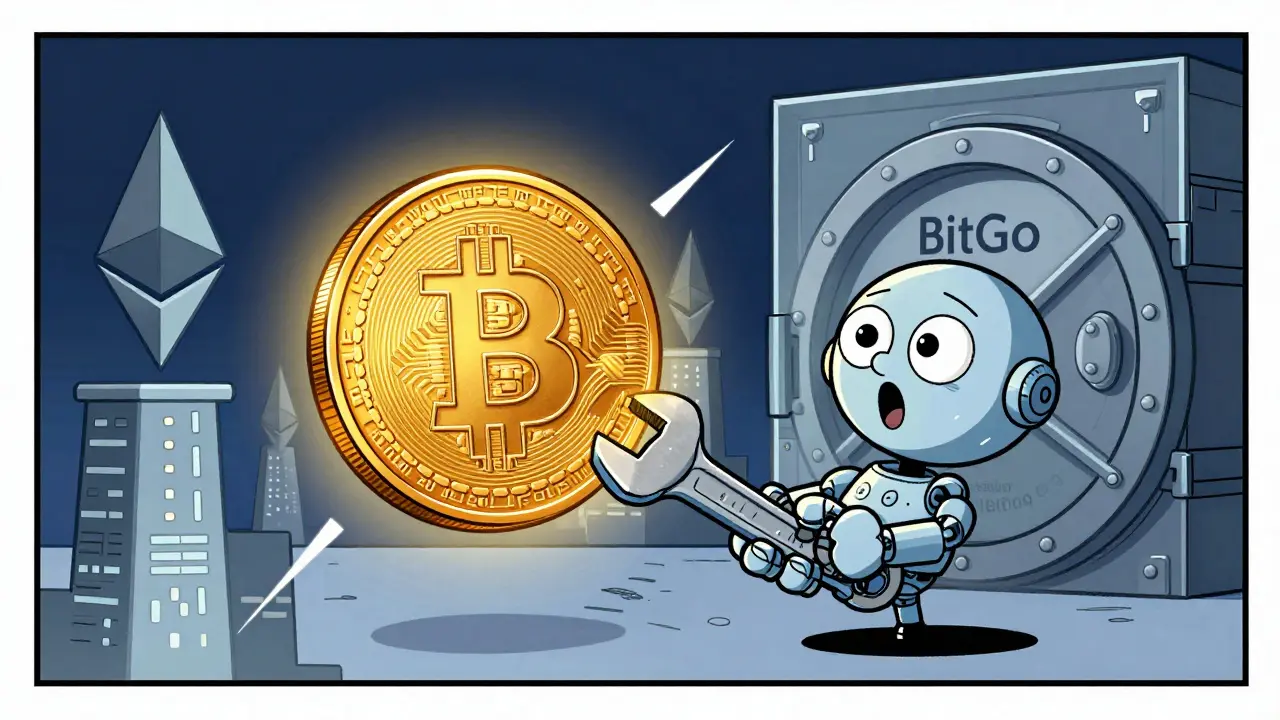
Imagine you own Bitcoin, but you want to earn interest on it in a DeFi lending protocol like Aave or Compound. The problem? Bitcoin doesn’t run on Ethereum. You can’t just plug it in. That’s where wrapped assets come in. They let you use your Bitcoin on Ethereum, your Ethereum on Solana, or your BNB on Avalanche - without selling it. Wrapped assets are digital tokens that mirror the value of another cryptocurrency, locked 1:1 with the original, and built to work on a different blockchain. They’re not magic. They’re plumbing. And right now, they’re the backbone of cross-chain DeFi.
How Wrapped Assets Actually Work
Wrapped assets aren’t created out of thin air. They’re backed. Every WBTC (Wrapped Bitcoin) token in circulation means there’s one real Bitcoin sitting in a secure vault somewhere. The same goes for WETH (Wrapped Ether), WMATIC, or any other wrapped token. The process is simple: you send your native asset - say, 1 BTC - to a custodian or smart contract. In return, you get 1 WBTC on Ethereum. To get your Bitcoin back, you burn the WBTC, and the custodian releases the original BTC.This isn’t just a technical trick. It solves a real problem. Blockchains are isolated. Bitcoin’s network can’t talk to Ethereum’s. Ethereum can’t interact with Solana’s. Without wrapped assets, Bitcoin holders are locked out of DeFi’s high-yield lending, liquidity pools, and yield farming. Wrapped tokens break that wall. They turn Bitcoin into something Ethereum protocols can recognize - an ERC-20 token.
WETH is a perfect example. Ether (ETH) is Ethereum’s native currency, but it wasn’t built as an ERC-20 token. That means it doesn’t work with most DeFi apps that require ERC-20 compatibility. So WETH was created - a wrapped version of ETH that follows the ERC-20 standard. Today, over 99.8% of ETH used in DeFi is WETH. Not because people prefer it, but because they have to.
Who Holds the Keys? Custodial vs. Decentralized Models
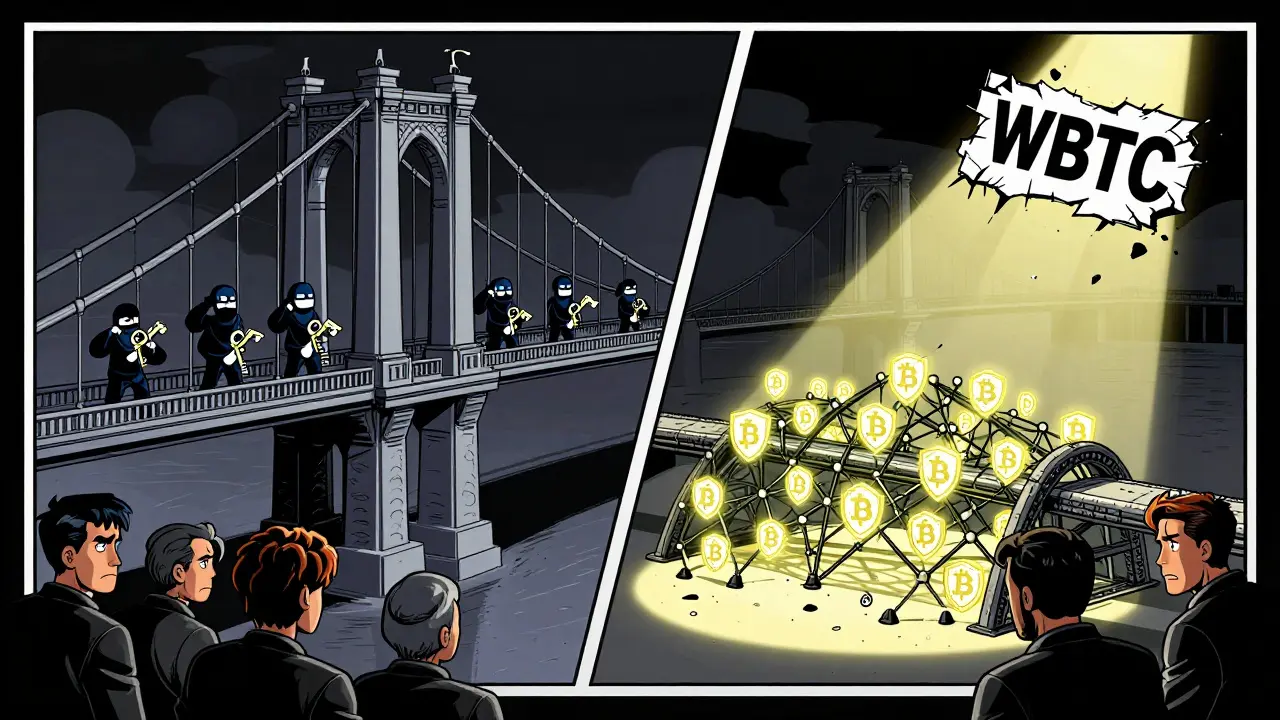
Not all wrapped assets are built the same. There are two main types: custodial and decentralized.WBTC is the biggest and oldest wrapped Bitcoin. It’s custodial. That means a single entity - BitGo - holds the actual Bitcoin in a multi-signature wallet. To release Bitcoin, three out of five approved parties must sign off. It’s secure, but it’s also centralized. Chainalysis found that 97.3% of WBTC’s security relies on just five entities. That’s a single point of failure. And if those five get hacked or coerced, your WBTC could vanish.
Then there’s renBTC, a decentralized alternative. Instead of one custodian, renBTC uses a network of 100+ nodes called “darknodes.” Each node locks up 5,000 REN tokens as collateral. If a node tries to steal, it loses its stake. No single party controls the Bitcoin. But it’s slower, more complex, and less liquid. As of late 2023, WBTC still held 63% of the wrapped Bitcoin market. renBTC had 18.7%. Why? Because WBTC got there first. Coinbase, Aave, Compound, and MetaMask all integrated WBTC early. Network effects win.
Why Wrapped Assets Are Everywhere in DeFi
Wrapped assets aren’t just convenient - they’re essential. As of Q3 2023, over $11.2 billion in value was locked in wrapped tokens. WBTC alone made up $7.8 billion of that. Why so much?Because they’re used as collateral. In lending protocols like Aave, you can deposit WBTC and borrow DAI, USDC, or ETH. That’s huge for Bitcoin holders who don’t want to sell but still want to use their assets. One Reddit user reported earning 4.7% APY on WBTC versus just 2.5% on ETH. That spread drives adoption.
WETH is even more critical. Nearly every DeFi protocol on Ethereum uses WETH. It’s the default token for swaps, staking, and liquidity provision. Without WETH, Ethereum’s DeFi ecosystem would collapse. It’s not a luxury - it’s infrastructure.
Even institutions are using them. Grayscale reported in early 2023 that 17 institutional clients used WBTC as collateral for $287 million in DAI loans. That’s a lot of Bitcoin sitting idle on a blockchain it doesn’t belong to - because it’s the only way to access DeFi without triggering a taxable event.
The Risks: Hacks, Fees, and Centralization
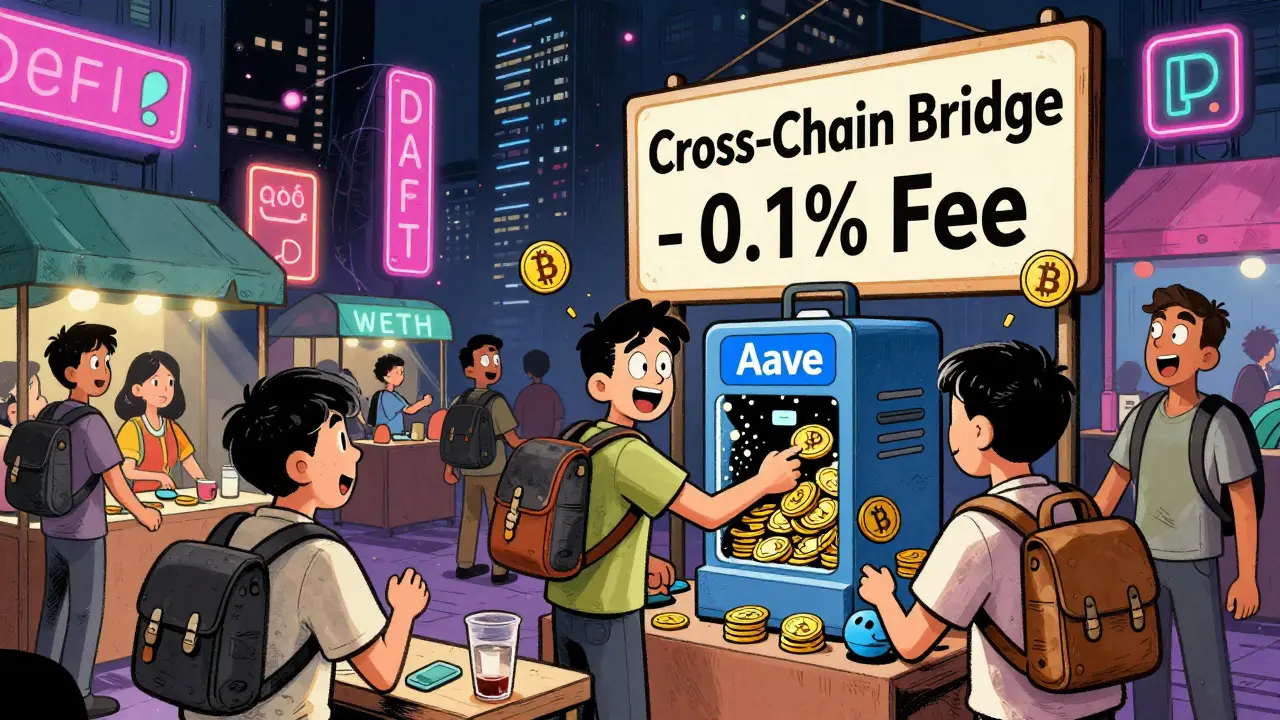
Wrapped assets aren’t risk-free. The biggest danger? Custody. In August 2022, the Nomad Bridge was hacked. Attackers drained $600 million in wrapped assets - including WBTC, WETH, and renBTC - by exploiting a flawed smart contract. The bridge didn’t hold the assets; it just trusted a misconfigured rule. That’s a smart contract risk, not a custody risk. But both matter.Then there are fees. Wrapping and unwrapping usually cost 0.1% to 0.5%. On Coinbase, it’s 0.1%. On decentralized bridges like RenBridge, it’s 0.5%. That might seem small, but on a $10,000 transfer, that’s $50. And during Ethereum congestion, gas fees spike. Users report failed redemption requests because the transaction cost exceeds the value of the wrapped token.
And then there’s the philosophical problem. Bitcoin was built to be decentralized, trustless, and censorship-resistant. WBTC requires trusting BitGo and five other entities. To Bitcoin maximalists, that defeats the whole point. Glassnode data shows only 0.87% of total Bitcoin supply is wrapped - despite WBTC being around for over three years. That’s not because people don’t want to use it. It’s because many don’t trust it.
What’s Next? The Future of Wrapped Assets
The industry knows the risks. That’s why new solutions are emerging. Chainlink’s Cross-Chain Interoperability Protocol (CCIP) and LayerZero are building trust-minimized bridges - ones that don’t need custodians or large collateral pools. Early tests show 99.98% peg accuracy across 10,000 simulated transactions. That’s promising.WBTC v3, launched in September 2023, already improved security: it now requires 4-of-7 signatures instead of 3-of-5. That reduces the chance of a single party causing a breach by 62%. It’s a step in the right direction.
But the biggest change might come from Ethereum itself. EIP-7251, proposed in 2023, could allow ETH to be used directly in DeFi protocols without needing to be wrapped. If that happens, WETH might become obsolete. But it’s still 18-24 months away.
Delphi Digital predicts that by 2027, custodial wrapped assets will shrink to just 40% of the market. Right now, they’re 78%. The shift is coming. But for now, wrapped assets are still the only way most people access cross-chain DeFi.
How to Get Started
If you want to try wrapped assets, here’s how:- Choose your asset. Want to use Bitcoin on Ethereum? Go for WBTC. Want to use ETH in a DeFi app? You’ll need WETH.
- Use a trusted platform. Coinbase and Kraken offer simple wrapping for beginners. For more control, use decentralized bridges like RenBridge or Multichain.
- Connect your wallet (MetaMask, Rainbow, etc.).
- Deposit your native asset. You’ll see a confirmation on your original blockchain (e.g., Bitcoin network).
- Wait. It can take 1 minute to an hour, depending on network congestion.
- Receive your wrapped token. It’ll appear in your wallet as an ERC-20 token.
Don’t confuse WBTC with renBTC or sBTC. They’re different projects with different risks. Always check which one a DeFi protocol supports.
And never wrap more than you’re willing to lose. If the custodian fails, or the bridge gets hacked, you might not get your money back. Treat wrapped assets like any other DeFi tool - understand the risks before you use them.
Wrapping It Up
Wrapped assets are the glue holding today’s fragmented DeFi world together. They let Bitcoin users earn yields on Ethereum. They let Solana tokens be used in Uniswap. They’re not perfect. They’re not decentralized. But they work. And right now, there’s no better way to move value across chains.As trust-minimized bridges mature, wrapped assets will likely fade. But for the next three to five years, they’ll remain essential. Whether you’re a Bitcoin holder looking to earn yield, or an Ethereum user trying to access more assets, wrapped tokens are the bridge you need - even if it’s built on sand.
Are wrapped assets the same as stablecoins?
No. Stablecoins like USDC or DAI are pegged to the U.S. dollar. Wrapped assets are pegged to another cryptocurrency - like Bitcoin or Ethereum. They’re both tokenized, but they represent different things. Stablecoins reduce volatility. Wrapped assets increase interoperability.
Can I unwrap my WBTC back to Bitcoin anytime?
Yes, but it’s not instant. You burn your WBTC, and the custodian (BitGo) releases the equivalent Bitcoin. This can take 1-60 minutes depending on network congestion and custodian processing times. During high Ethereum gas fees, unwrapping can be delayed or fail if the transaction cost is too high.
Why is WETH needed if ETH already exists on Ethereum?
ETH was created before the ERC-20 standard existed. Most DeFi protocols require ERC-20 tokens to interact properly - for lending, swapping, or staking. WETH is ETH wrapped into an ERC-20 token so it can work with those protocols. It’s the same value, just formatted correctly.
Are wrapped assets safe?
They’re as safe as the system behind them. Custodial wrapped assets like WBTC rely on trusted third parties - if those parties are hacked or compromised, your assets are at risk. Decentralized versions like renBTC reduce that risk but introduce smart contract vulnerabilities. Always research the project, check audits, and never invest more than you can afford to lose.
Do wrapped assets have transaction fees?
Yes. Most platforms charge a wrapping/unwrapping fee between 0.1% and 0.5%. Plus, you pay Ethereum gas fees when you interact with the token on-chain. During high congestion, gas can spike to $20-$50 per transaction. Always factor in both fees before wrapping or unwrapping.
Will wrapped assets disappear in the future?
They’ll likely decline, but not disappear overnight. New cross-chain bridges like Chainlink CCIP and LayerZero aim to replace them by enabling direct communication between blockchains. But those technologies are still early. Experts predict custodial wrapped assets will drop to 40% of the market by 2027. For now, they’re still the most reliable way to move assets across chains.




Daniel Verreault
January 3, 2026 AT 05:36WBTC is basically Bitcoin on life support for DeFi nerds. I get it, you wanna earn yield but why trust some corporate custodian when you could just use a trustless bridge? RenBTC might be slower but at least your BTC isn’t sitting in a vault with 5 guys who could get subpoenaed tomorrow.
Jacky Baltes
January 3, 2026 AT 17:54The philosophical tension here is fascinating. Bitcoin was designed as a peer-to-peer electronic cash system, not a collateral asset for Ethereum DeFi. Wrapped tokens are a workaround, not a solution. They preserve value but sacrifice sovereignty. We’re building financial Frankenstein’s monster and calling it innovation.
prashant choudhari
January 4, 2026 AT 07:43WETH is mandatory because ETH is not ERC20. Simple as that. Most protocols require ERC20 interface for seamless integration. No debate. This is basic technical compatibility. If you want to use ETH in DeFi you wrap it. End of story.
Willis Shane
January 4, 2026 AT 17:08While I appreciate the technical exposition, I must emphasize the systemic fragility inherent in custodial wrapped assets. The concentration of control among five entities constitutes a critical single point of failure. Institutional adoption does not equate to resilience. This is not merely a risk-it is an existential vulnerability in the architecture of modern DeFi.
Jake West
January 6, 2026 AT 06:51Bro why are we still using WBTC like it’s 2020? Every time I see someone wrap BTC I die a little inside. Just use Bitcoin L2s or wait for LayerZero. This whole wrapped asset thing is just crypto’s version of using a flip phone in 2024.
Abhisekh Chakraborty
January 6, 2026 AT 07:19Guys I just wrapped 5 BTC and got 4.7% APY on Aave and I’m already making more than my salary. You all are overthinking this. If you’re scared of custodians then don’t use it. But if you want real yield stop being a Bitcoin maximalist and embrace the future. I made $12k this month just from WBTC farming. Who’s with me?
dina amanda
January 6, 2026 AT 18:23So who really owns those Bitcoin vaults? Are you telling me BitGo isn’t just a front for the Fed? I’ve seen the videos. They’re tracking every WBTC. This is how they control the money. They want you to think you own Bitcoin but really you’re just holding a digital IOU that can be frozen anytime. Wake up people.
Emily L
January 8, 2026 AT 05:56lol I tried to unwrap my WBTC last week and got hit with $47 in gas fees. I ended up just keeping it because it cost more to get my BTC back than I had in WBTC. So now I’m stuck with a token I can’t even use properly. Thanks crypto.
Gavin Hill
January 9, 2026 AT 11:04It’s ironic that we’re building bridges across chains using centralized vaults. We say we want decentralization but we keep trusting institutions to hold the keys. Maybe the real innovation isn’t the wrapped token-it’s the realization that interoperability without trust is the next frontier. We’re not just solving technical problems. We’re solving human ones.