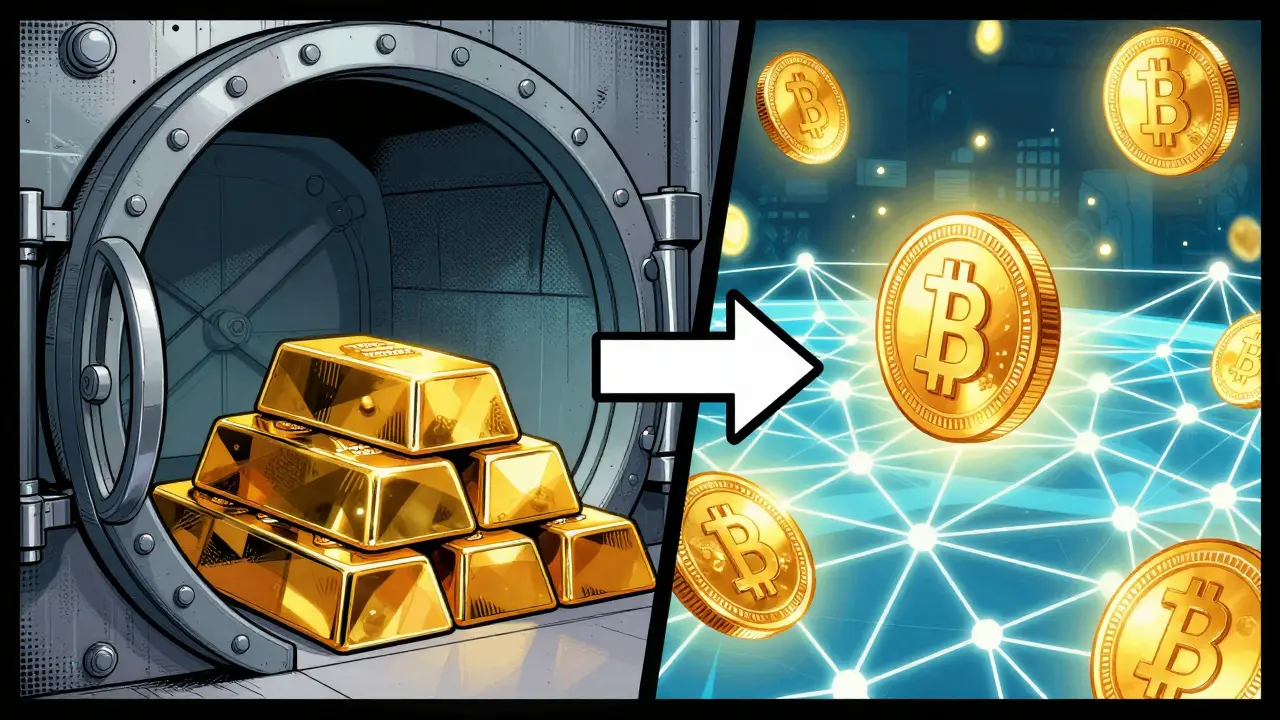
You’ve probably seen the ticker BDTC pop up on trading screens or heard whispers about a cryptocurrency that claims to be backed by physical gold. It sounds like the perfect marriage of digital convenience and traditional stability. But before you rush to buy, you need to know exactly what you are dealing with. Is it a revolutionary financial tool, or just another speculative asset with big promises?
BDTCOIN (BDTC) is a decentralized digital currency that claims to be fully backed by physical gold stored in audited vaults, positioning itself as a Real-World Asset (RWA) token. The project aims to bridge the gap between traditional bullion ownership and the speed of blockchain transactions. With a fixed supply cap of 71 million coins, proponents argue it offers scarcity similar to Bitcoin but with the intrinsic value anchor of precious metals. However, the reality behind the marketing is complex, filled with data discrepancies and transparency questions that every investor should understand.
The Core Concept: Gold Meets Blockchain
To understand BDTC, you have to look at its stated purpose. The official narrative describes it as a "completely gold standard digital currency." In simple terms, this means that for every BDTC coin circulating on the network, there is supposed to be a corresponding amount of physical gold sitting in a secure vault. This model falls under the broader category of Real-World Assets (RWA), which involves tokenizing tangible assets like real estate, art, or commodities to make them tradeable on blockchains.
The theory is appealing. Gold has been a store of value for thousands of years, protecting wealth against inflation. Cryptocurrencies offer instant, borderless transfers without banks. By combining them, BDTC claims to give you the best of both worlds. You can hold an asset that doesn't lose value due to printing presses, yet you can send it across the globe in minutes rather than waiting days for wire transfers or shipping bullion.
However, the devil is in the details. While the website states that smart contracts verify these reserves in real-time, independent verification is sparse. Unlike major fiat-backed stablecoins that publish monthly attestations from top-tier accounting firms, BDTC’s reserve audits are not widely publicized by third-party auditors in mainstream financial news. This lack of transparent, regular reporting is a key factor to consider when evaluating its trustworthiness.
Tokenomics and Supply Constraints
One of the most concrete facts about BDTC is its supply structure. Unlike many cryptocurrencies that have infinite supplies or complex emission schedules, BDTC has a hard cap.
- Maximum Supply: 71,000,000 BDTC
- Circulating Supply: Reports suggest the full 71 million is already in circulation.
- Inflation Rate: 0% (No new coins will be minted after the cap is reached).
This fixed supply is designed to create scarcity. If demand for gold-backed tokens rises, and the supply cannot increase, basic economics suggests the price per token could go up. TradingView and other aggregators confirm this limit, noting that no new coins will be released once this number is hit. This makes BDTC structurally similar to Bitcoin in terms of scarcity, but distinct because its value proposition relies heavily on the external commodity (gold) rather than purely on network utility or speculation.
But here is the catch: we do not know the exact conversion rate. The documentation does not explicitly state how many grams or troy ounces of gold back one single BDTC coin. Without knowing if 1 BDTC equals 1 gram, 1 ounce, or some fractional amount, it is difficult to calculate the true "fair value" based solely on spot gold prices. This opacity leaves room for significant price volatility unrelated to gold movements.
Market Data and Price Volatility
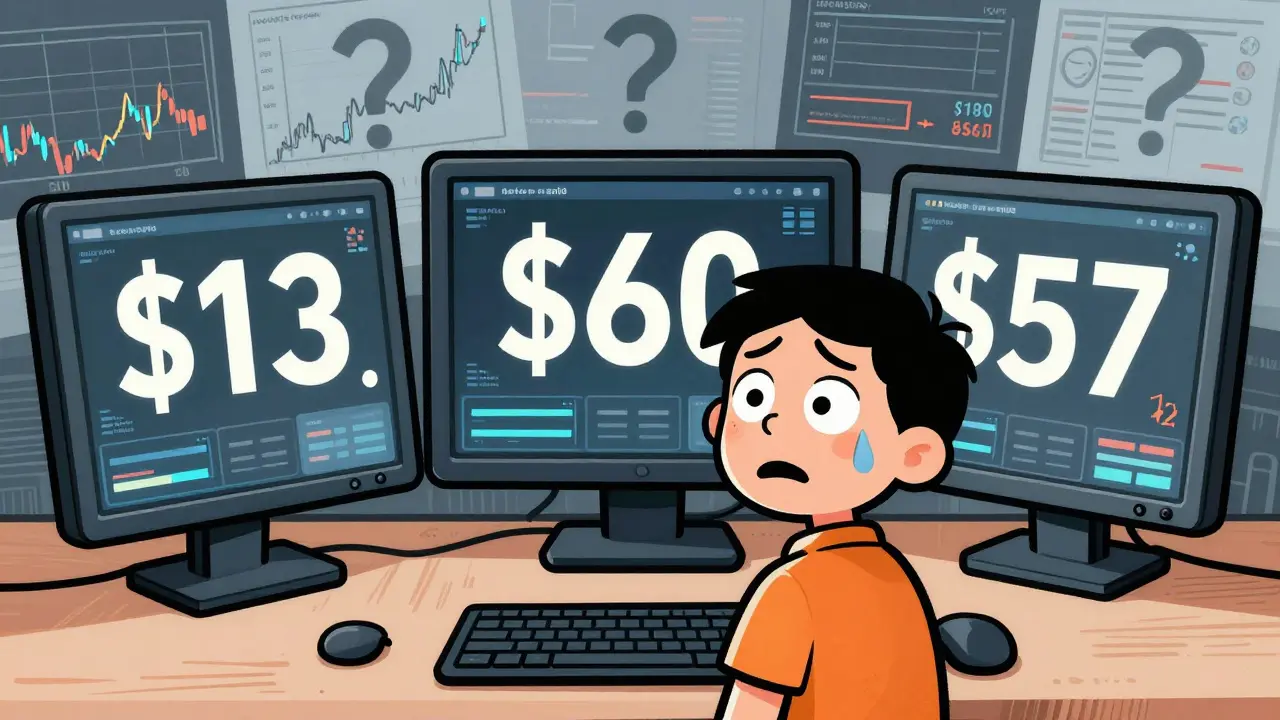
If you check the price of BDTC today, you might get confused. That is because market data for this specific asset is notoriously inconsistent across different platforms. This is a red flag you should pay attention to.
| Platform | Reported Price (USD) | 24h Volume (USD) | Note |
|---|---|---|---|
| CoinCarp | $13.31 - $57.82 | $1M - $481K | Internal inconsistencies within same source |
| CoinGecko | $61.98 - $63.93 | N/A | Higher range, limited volume data |
| TradingView | $13.16 - $60.66 | $314K | Wide variance depending on exchange feed |
| Crypto.com | $16.90 | $2.96M | Shows recent downward trend |
As you can see, the price varies wildly. One platform might show it at $13, while another shows it at $60. Why does this happen? Usually, it indicates low liquidity or fragmented trading pairs. BDTC is listed on exchanges like LBank, but it may not be traded on major tier-1 exchanges like Binance or Coinbase. When a token trades on smaller venues with less volume, prices can diverge significantly because there aren't enough buyers and sellers to keep the price uniform across all markets.
This volatility means that buying BDTC carries higher risk than buying established assets like Bitcoin or Ethereum. You might buy at $60 on one exchange and find out the "real" market price on another is closer to $15. Always check multiple sources and understand the spread before executing a trade.
Technical Architecture and Privacy
Under the hood, BDTC operates on its own blockchain. The project maintains a GitHub repository titled "Bdtcoin Core," which mirrors the structure of Bitcoin Core. This suggests that BDTC uses a UTXO (Unspent Transaction Output) model, similar to Bitcoin, rather than an account-based model like Ethereum. It is likely written in C++ and relies on a peer-to-peer network for transaction validation.
One feature highlighted by marketing materials is privacy. CoinCarp notes that BDTC offers a "high level of privacy" for users. In the context of a gold-backed token, this is unusual. Most regulated financial instruments require strict Know Your Customer (KYC) and Anti-Money Laundering (AML) checks. If BDTC allows anonymous transfers of gold-value, it appeals to those seeking financial confidentiality but raises serious regulatory concerns. Governments are increasingly cracking down on anonymous crypto transactions, especially those linked to high-value assets like gold.
Furthermore, the consensus mechanism-the way the network agrees on transactions-is not clearly detailed in public docs. Whether it uses Proof-of-Work (like Bitcoin) or Proof-of-Stake affects energy consumption and security. Without clear technical whitepapers detailing hash functions or block times, developers and tech-savvy investors are left guessing about the network's robustness.
Risks and Transparency Concerns
Let’s talk about the elephant in the room: trust. For a gold-backed token to work, you must trust three things:
- The Reserves Exist: Is there actually gold in the vaults?
- The Audits Are Real: Are independent firms verifying this regularly?
- The Redemption Works: Can you actually swap your digital tokens for physical bars?
Currently, BDTC scores low on transparency for all three. The founding team remains anonymous. There is no publicly verifiable legal entity name attached to the core development, nor are there named directors or custodians. Compare this to PAX Gold (PAXG) or Tether Gold (XAUT), where the companies behind them are well-known, regulated entities that publish frequent audit reports. BDTC’s anonymity is a significant risk factor.
Additionally, the redemption mechanism is described vaguely. The site says holders can exchange BDTC for gold "at any time," but it doesn’t specify minimum amounts, fees, shipping costs, or geographic restrictions. In practice, redeeming small amounts of crypto for physical gold is often prohibitively expensive due to logistics. If the redemption process is difficult or costly, the "gold backing" becomes more of a marketing claim than a practical safety net.

How to Buy and Store BDTC
If you decide the potential rewards outweigh the risks, here is how you typically interact with BDTC. Since it is not on every major exchange, your options are limited but straightforward.
Step 1: Choose an Exchange. Currently, centralized exchanges like LBank list BDTC. You will need to create an account, complete identity verification (KYC), and deposit funds, usually in USDT or BTC.
Step 2: Trade for BDTC. Look for the BDTC/USDT trading pair. Be mindful of the order book depth. If you place a large buy order, you might slip the price significantly due to low liquidity.
Step 3: Withdraw to a Wallet. Do not leave your coins on the exchange long-term. The official BDTC website offers wallet creation tools. Alternatively, since it is a Bitcoin-derived chain, some multi-currency wallets that support custom RPC nodes might work, but native support is limited. Ensure you control your private keys. Remember, if the project disappears, having your coins in a self-custody wallet is your only recourse, though it won't help if the underlying gold reserves vanish.
Is BDTC Right for You?
BDTCOIN occupies a niche space in the crypto world. It tries to solve the problem of crypto volatility by anchoring to gold, but it introduces new risks through opacity and low liquidity. It is not suitable for conservative investors looking for a safe haven comparable to holding physical gold in a bank vault. Nor is it ideal for traders who need deep liquidity for quick entry and exit.
It might appeal to speculative investors who believe in the long-term growth of Real-World Asset tokenization and want exposure to early-stage projects. However, you should treat it as a high-risk venture. Never invest more than you can afford to lose, and always diversify. Before committing funds, wait for clearer information regarding independent audits and team disclosure. In the world of finance, if something sounds too good to be true-like anonymous, gold-backed, high-privacy money-always dig deeper before diving in.
Is BDTCOIN actually backed by gold?
The project claims that each BDTC token is backed by physical gold stored in audited vaults. However, independent, regularly published audit reports from major third-party firms are not readily available in public financial media, making it difficult for outsiders to fully verify the reserves.
Why is the BDTC price different on various websites?
Price discrepancies occur because BDTC trades on smaller exchanges with lower liquidity. Different aggregators pull data from different trading pairs, leading to varied prices. Always check multiple sources and be aware of the bid-ask spread.
Can I redeem BDTC for physical gold?
The official website states that a redemption mechanism exists, allowing holders to exchange BDTC for gold. However, specific details regarding minimum thresholds, fees, and logistical processes are not clearly disclosed, which may make practical redemption difficult for average users.
Who created BDTCOIN?
The founding team and legal entity behind BDTCOIN remain largely anonymous. Unlike regulated competitors, BDTC does not publicly disclose the names of its founders, directors, or the specific company registration details, which adds to the risk profile.
What is the maximum supply of BDTC?
BDTC has a fixed maximum supply of 71,000,000 coins. This hard cap is designed to ensure scarcity, meaning no new coins will be created once this limit is reached, similar to Bitcoin's supply model.