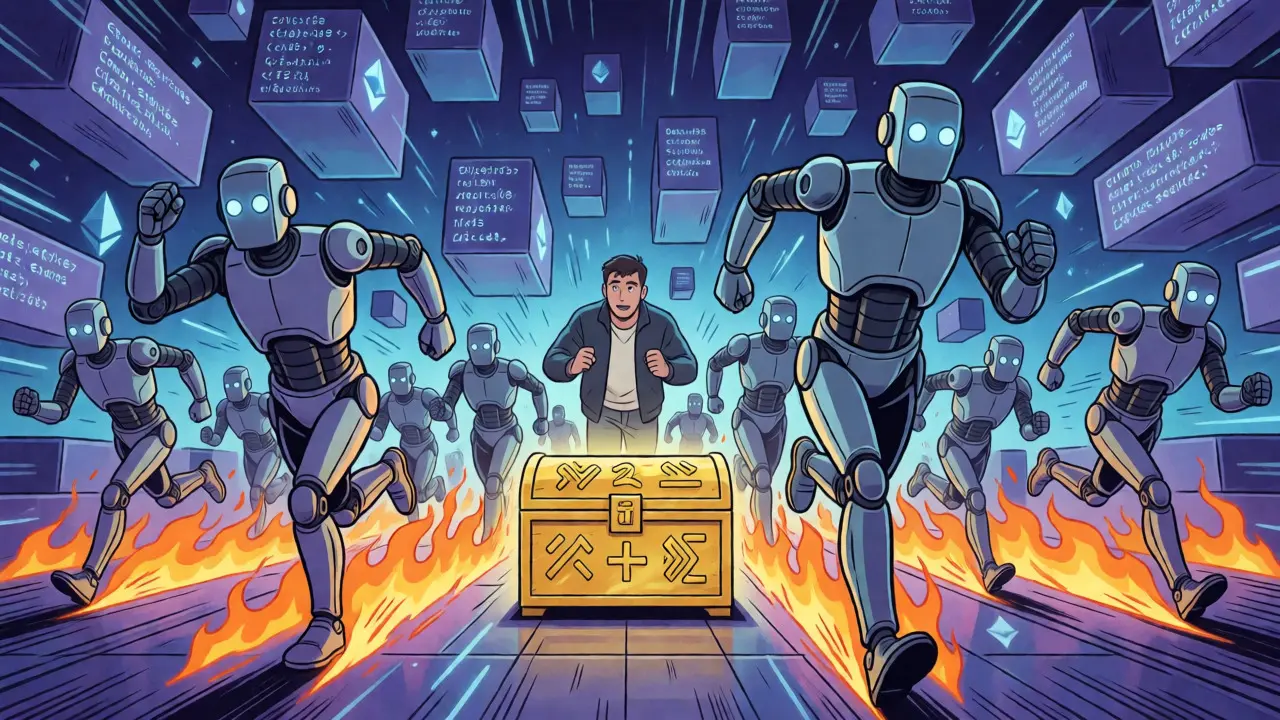
Imagine buying a ticket to the hottest party in town for $831, only to find out three years later that the venue burned down, the music stopped, and your ticket is now worth less than a cup of coffee. That’s roughly the story of Rook (ROOK), the native cryptocurrency of KeeperDAO. If you’ve stumbled upon this token while digging through the graveyard of DeFi projects from 2021, you’re probably asking: what was it supposed to do, and why did it crash so hard?
Quick Summary / Key Takeaways
- Core Function: ROOK is an ERC-20 governance token for KeeperDAO, a protocol designed to help "keepers" (automated bots) coordinate to extract value from blockchain transactions.
- The Problem It Solved: It aimed to fix the "prisoner's dilemma" among bots competing for arbitrage and liquidation profits, known as Maximal Extractable Value (MEV).
- Current Status: As of late 2025/early 2026, ROOK has suffered a near-total collapse, losing over 99% of its all-time high value.
- Liquidity Warning: Trading volume is extremely low, making it difficult to buy or sell significant amounts without moving the price drastically.
- Verdict: It serves primarily as a historical case study of failed DeFi infrastructure rather than a viable current investment.
The Core Concept: What Was KeeperDAO Trying to Do?
To understand Rook, you first have to understand the chaos of early decentralized finance (DeFi). In those days, if you wanted to swap tokens on Uniswap or borrow against collateral on Aave, you weren't just interacting with smart contracts; you were racing against other people. Automated bots, called "keepers," would scan the blockchain for opportunities-like when a loan needed to be liquidated or when a price discrepancy appeared between two exchanges.
Here was the problem: these keepers were playing a game of chicken. If two bots tried to execute the same profitable transaction, they’d bid up gas fees (transaction costs) until the profit disappeared. This is classic Game Theory, specifically the "Prisoner's Dilemma." Each bot acted in self-interest, hurting the group's total potential earnings.
KeeperDAO stepped in as a coordination layer. Think of it as a union for bots. Instead of fighting each other, keepers could join the DAO. They would pool their resources and strategies. When a profitable opportunity arose, the DAO would decide who executed the trade, and the profits were shared among participants based on how much ROOK they staked. The goal was to maximize Maximal Extractable Value (MEV)-the profit miners or validators can make by reordering, including, or excluding transactions within a block.
How ROOK Worked Under the Hood
Technically, ROOK is an ERC-20 token built on the Ethereum blockchain. Its contract address is 0xfa50...313d4a. But unlike utility tokens that just give you access to a service, ROOK was deeply embedded in the economic incentives of the protocol.
The system relied on what the team called "hiding and coordination games." Keepers would stake ROOK to participate. If they successfully helped the protocol capture value, they earned rewards. If they cheated or didn't participate, they risked slashing (losing) their staked tokens. This created a powerful incentive structure where honesty was literally profitable.
The tokenomics were tight. The maximum supply was capped at 1.5 million tokens, though some sources cite 800,000 due to burn mechanisms or different accounting methods during its active phase. As of recent data, the circulating supply hovered around 617,636 tokens. With such a small supply, every bit of demand-or lack thereof-had a massive impact on the price.
The Rise and Fall: From $831 to Pennies
If you look at the charts, the trajectory is brutal. ROOK launched into the frenzy of the 2021 bull run. On February 14, 2021, it hit an all-time high of $831.80. At that peak, the market cap was hovering around $500 million. For a niche project focused on bot coordination, that was an astronomical valuation.
Fast forward to today, and the picture is starkly different. Prices have fluctuated wildly but generally trended downward, recently sitting in the range of $0.14 to $0.55 depending on the exchange and the specific day. That represents a decline of over 99.9% from its peak. Why did this happen?
| Metric | All-Time High (Feb 2021) | Recent Average (2025/2026) | Change |
|---|---|---|---|
| Price per Token | $831.80 | ~$0.20 - $0.55 | -99.9% |
| Market Cap | ~$500 Million | ~$120k - $340k | -99.9% |
| 24h Volume | High Liquidity | <$400 USD | Near Zero |
The primary reason for the collapse wasn't necessarily a hack or a rug pull, but technological obsolescence. As Ethereum evolved, the need for a third-party coordination layer like KeeperDAO diminished. New protocols began handling MEV natively. Solutions like Flashbots emerged, offering more direct ways for users to control their transaction ordering. Essentially, the problem KeeperDAO solved got solved better by other means, leaving ROOK without a clear use case.
Why Did It Fail? The MEV Landscape Shifted
In crypto, being early is good, but being too early can be fatal. KeeperDAO bet on a model where independent keepers needed a central coordinator. However, the industry moved toward integrated solutions. Major DeFi platforms started building their own keeper networks or using standardized interfaces that didn't require holding a separate governance token to participate.
Furthermore, the complexity of running a node or participating in the DAO became a barrier to entry. While the promise was passive income from staking, the reality required technical know-how. Most retail investors bought ROOK hoping for price appreciation, not because they understood the intricate game theory behind keeper coordination. When the hype cycle ended, there was little fundamental demand left to support the price.
Community engagement also evaporated. Data shows only about 16,180 token holders remain, many of whom are likely "bag holders" from the 2021 era. Social media activity on platforms like Twitter and Reddit has gone quiet. There are no major updates on the GitHub repository, signaling that active development has largely stalled.
Is ROOK Still Relevant Today?
For the average crypto investor, ROOK is essentially dead. The trading volume is dangerously low-often under $400 per day across all exchanges combined. This creates a liquidity trap. You might see a price on CoinGecko, but if you try to sell even a moderate amount, you’ll suffer massive slippage because there aren't enough buyers on the other side.
However, from a research perspective, it remains interesting. It’s a textbook example of how quickly value can evaporate in DeFi when a protocol fails to adapt to infrastructure changes. If you are studying the history of MEV or the evolution of DeFi governance tokens, looking at KeeperDAO’s whitepaper and code provides valuable lessons on token design pitfalls.
Should you buy it? Unless you are a speculator betting on a miraculous revival or a developer interested in auditing old code for educational purposes, the answer is likely no. The risks far outweigh the potential rewards given the lack of active development and community support.
Comparison: ROOK vs. Other MEV Tokens
It helps to compare ROOK to other projects that attempted to tackle similar problems. Unlike general-purpose governance tokens like UNI (Uniswap) or COMP (Compound), which grant voting rights on broad protocol parameters, ROOK was hyper-specialized.
| Feature | ROOK (KeeperDAO) | UNI (Uniswap) | FLX (Flux Protocol) |
|---|---|---|---|
| Primary Use Case | Keeper Coordination | DEX Governance | Storage/Lending |
| Token Utility | Staking/Voting on Fees | Voting/Treasury | Access/Incentives |
| Current Activity | Minimal/Stalled | Very High | Moderate |
| Market Relevance | Low | High | Niche |
Projects like EigenLayer, which focus on restaking and securing multiple networks, have captured the market share that KeeperDAO once hoped to dominate. These newer protocols offer clearer value propositions and better liquidity, making them more attractive to both developers and investors.
Frequently Asked Questions
Is Rook (ROOK) still actively developed?
Development activity has significantly slowed down and appears nearly stagnant. Recent checks on official GitHub repositories and social channels show minimal commits or updates, suggesting the project is no longer in an active growth phase.
Where can I buy ROOK tokens?
ROOK is listed on several exchanges, including Coinbase and Uniswap, but liquidity is very thin. Be cautious of high slippage fees when executing trades due to the low daily trading volume.
What happened to the price of ROOK?
The price collapsed by over 99% from its all-time high of $831.80 in February 2021. This was driven by a combination of broader market downturns, loss of competitive edge against newer MEV solutions, and a lack of sustained user adoption.
Can I still earn yield with ROOK?
Historically, yes, by staking in the KeeperDAO vaults. However, with the protocol's reduced activity, yields may be negligible or non-existent compared to more active DeFi platforms. Always check the current APY before committing funds.
Is ROOK a scam?
No, it is not considered a scam in the traditional sense. It was a legitimate open-source project with real technology. However, it failed commercially, leading to severe value destruction for early investors.
Next Steps for Investors and Researchers
If you are holding ROOK from the 2021 era, consider whether the tax-loss harvesting benefit outweighs the potential for any future recovery. Given the lack of news, waiting for a moonshot might be a futile exercise.
For new researchers, treat ROOK as a museum piece. Study its documentation to understand how early DeFi attempts to solve coordination failures. Then, look at modern alternatives like Flashbots or EigenLayer to see how those problems are being solved today. The lesson here is clear: in blockchain, infrastructure evolves fast, and tokens that don't evolve with it get left behind.
Indu Nair
September 1, 2026 AT 17:44Oh, this is absolutely heartbreaking but also incredibly educational! I remember when everyone was screaming about MEV and coordination games like it was the future of finance. It’s so painful to see a project with such strong theoretical foundations just evaporate because the infrastructure moved on without them. But hey, don't be too hard on yourself or anyone who held bags! We all learn from these cycles, right? The market is brutal, yes, but every failure teaches us something valuable about adaptability and real utility versus hype. Let's keep pushing forward, friends!
Stephen McElreavy
September 2, 2026 AT 08:25The narrative here is quite dramatic, isn't it? From $831 down to pennies... it really highlights the fragility of DeFi protocols that rely heavily on specific market conditions rather than robust, diversified utility. As someone who appreciates the technical side, I have to say, the shift toward integrated MEV solutions like Flashbots was inevitable. KeeperDAO tried to be a union for bots, which is a fascinating sociological experiment in blockchain, but ultimately, efficiency wins over coordination overhead. It’s a shame, truly, because the game theory aspect was elegant. But we must respect the boundaries of what technology can sustainably support. Rest in peace, ROOK.
Alexander James
September 2, 2026 AT 17:08I feel morally obligated to point out that this is exactly why you shouldn't chase narratives without understanding the underlying mechanics. People bought ROOK because they saw green candles, not because they understood the prisoner's dilemma applied to arbitrage bots. That kind of ignorance leads to suffering, plain and simple. We need to hold ourselves and others to a higher standard of due diligence. If you didn't read the whitepaper, you deserved the loss. It’s harsh, but it’s the truth. The market doesn't care about your feelings; it cares about utility and liquidity, both of which vanished here.
Mary Burnett
September 4, 2026 AT 01:31I completely understand the frustration expressed by many in this thread, especially those who invested their hard-earned savings during the peak enthusiasm. It is important to acknowledge that while the financial outcome was disappointing, the learning curve for the entire community has been steep. Many investors were simply following the crowd, hoping for a positive return, and there is no shame in that. Perhaps we should focus less on assigning blame and more on how we can better support each other through these volatile periods. Empathy goes a long way in these communities, even when the charts look bleak.
Dominic Jones
September 5, 2026 AT 04:27Indeed... indeed. The cycle of rise and fall is eternal, much like the seasons. One must ask oneself: what is the true value of a token if its purpose ceases to exist? Is it merely a vessel for speculation, or does it represent a genuine solution to a human problem? In this case, the solution became obsolete before it could fully mature. It is a philosophical tragedy, really. We cling to assets as if they are extensions of our identity, yet they are ephemeral. Let us reflect on this impermanence. Let us find peace in the knowledge that we participated in the grand experiment of decentralized finance, regardless of the outcome.