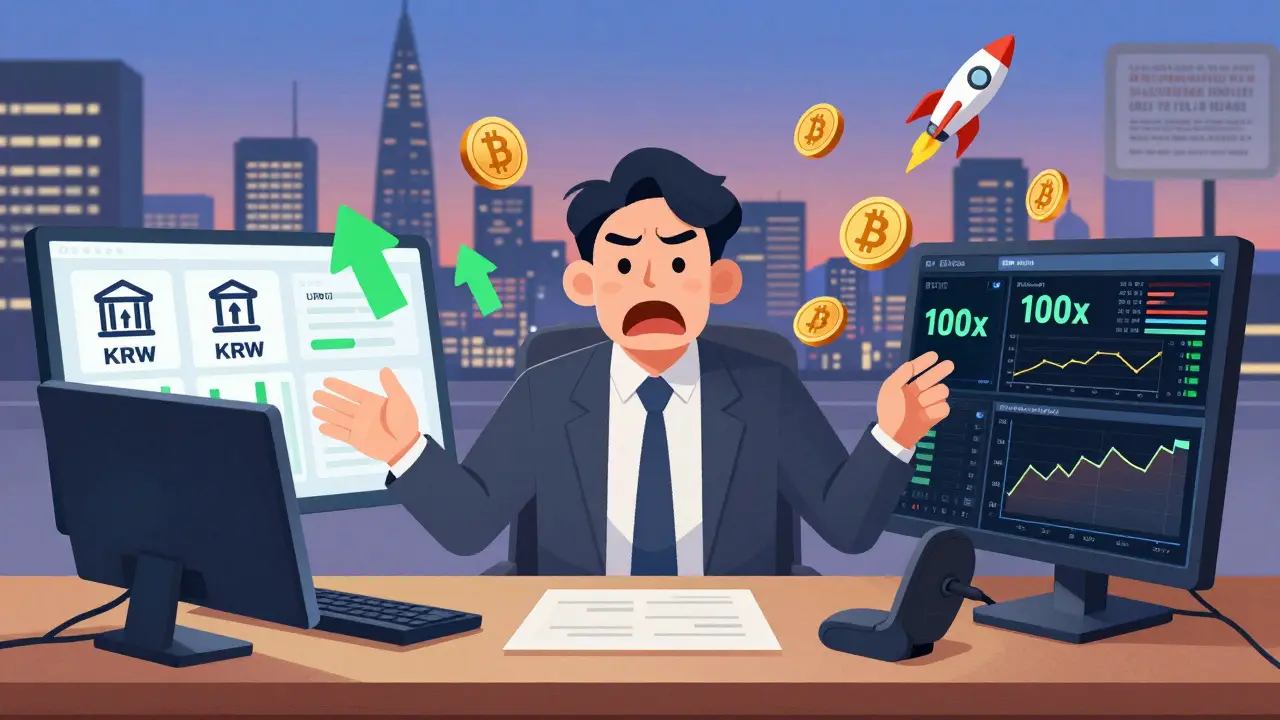
If you're a crypto trader in South Korea and you've heard about BTCC, you're probably wondering: Is this exchange worth it? Or should you stick with UPbit, Bithumb, or Korbit? The truth is, BTCC isn't a Korean exchange. It doesn't have a Seoul office. It doesn't let you deposit Korean Won (KRW) directly. But it does offer something most local exchanges don’t: deep futures markets, 100x leverage, and lightning-fast execution. So who is it actually for? And is the hassle worth it?
What BTCC Actually Is (And What It Isn't)
BTCC started in Shanghai in 2011 as BTC China, one of the first big crypto exchanges in the world. After China banned crypto trading in 2017, BTCC shut down its local operations and moved its headquarters to London. Today, it serves global users - including those in South Korea - but it doesn’t have a legal entity there. That means no Korean license, no KRW deposits, and no local customer support team. This isn’t a flaw. It’s a design choice. BTCC built itself as a global derivatives powerhouse, not a retail KRW gateway. While UPbit handles 39.5% of Korea’s crypto volume by letting you buy Bitcoin with your bank account, BTCC caters to traders who want to go big on leverage, not just buy and hold.Trading Tools: Where BTCC Crushes Local Exchanges
If you’ve ever tried to trade BTC futures on UPbit or Bithumb, you’ve probably hit a wall. Most Korean exchanges cap leverage at 5x. BTCC? You can go up to 100x. That’s not a typo. BTCC supports over 60 cryptocurrencies for perpetual futures trading - BTC, ETH, SOL, DOGE, XRP - with two settlement options: USDT-margined (easier for most) or coin-margined (for advanced users). In 2022, they added tokenized futures on stocks and commodities like Apple shares and gold, all settled in USDT. No other Korean exchange offers this. The tech behind it is serious. Their trading engine handles 100,000 orders per second with an average execution time of just 1.2 milliseconds. That’s faster than most Wall Street systems. Professional traders in Korea use BTCC because their order books are deeper. One trader measured 12.7x more liquidity at key price points on BTCC versus UPbit. For scalpers and arbitrageurs, that’s the difference between profit and slippage.Fees: Transparent, But Not Always Cheaper
BTCC’s fee structure is straightforward: 0.1% for both makers and takers. That’s standard. But here’s the catch - if you trade over $50 million a month, fees drop to 0.02% maker and 0.04% taker. Most Korean traders won’t hit that, but if you’re a high-volume player, it’s a real advantage. Compare that to UPbit, which charges 0.15% taker fee for KRW pairs. On paper, BTCC looks cheaper. But you have to factor in the cost of getting your money there. Since you can’t deposit KRW directly, you have to buy USDT on another exchange like Kraken or Binance, then send it to BTCC. That adds time, fees, and risk. One Korean user reported three failed bank transfers because of Korea’s 50 million KRW daily limit on international transfers. That’s a hidden cost most reviews ignore.Security: Strong, But Not Tailored for Korea
BTCC scores 4.1 out of 5 on security audits. They keep 98% of funds in cold storage, use multi-signature wallets, and offer two-factor authentication. They also publish proof-of-reserves monthly - something most Korean exchanges don’t do. But here’s the problem: Korean regulators require exchanges to hold user funds in separate cold wallets under ISMS certification. BTCC meets global standards, but they don’t advertise compliance with Korea’s specific rules. That’s not illegal - they’re not operating as a Korean exchange - but it creates a gray zone. If the government cracks down on unlicensed platforms in 2026, BTCC could be targeted.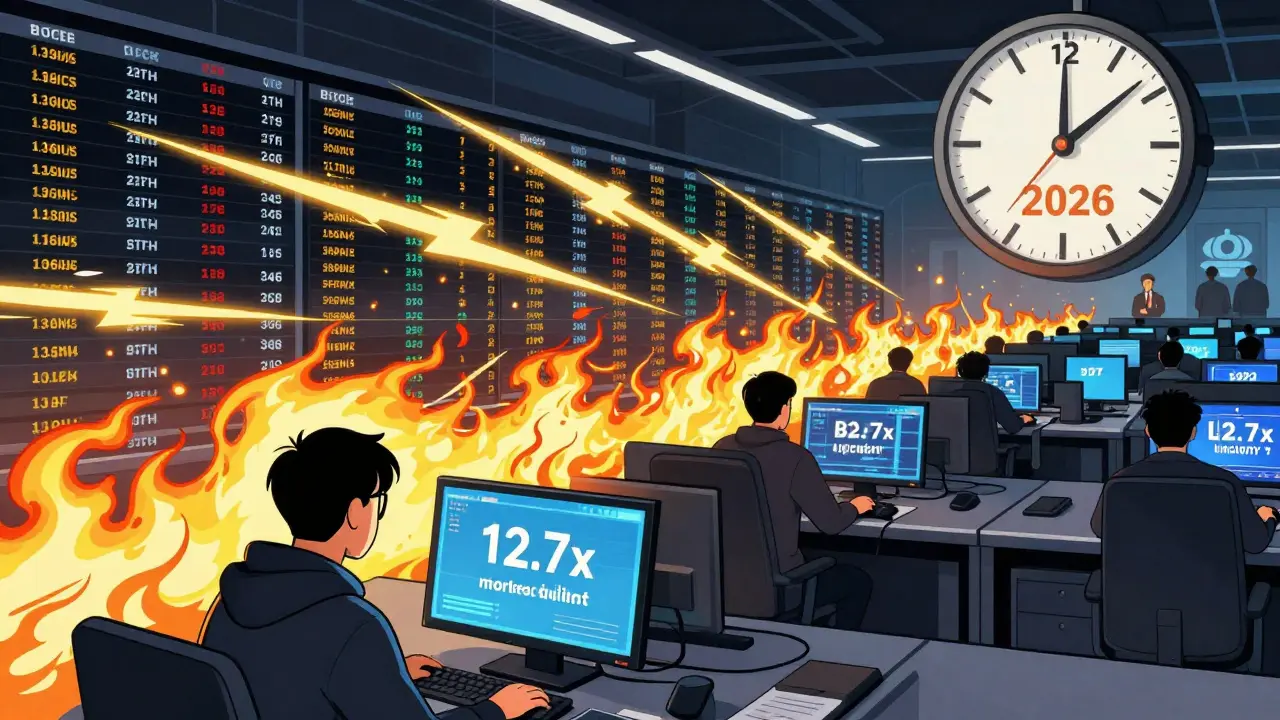
Korean User Experience: The Real Bottleneck
This is where BTCC falls apart for most Koreans. - No Korean language support in the app or website. The mobile interface is in English only.- Customer service response time averages 18 hours for Korean users. UPbit replies in under 2 hours.
- KYC requires a passport, not a Korean resident registration number. Onboarding takes 36-48 hours. UPbit: 15-30 minutes.
- Tax reporting? BTCC doesn’t auto-calculate Korea’s 22% capital gains tax. You’re on your own.
- Machine-translated Korean documentation scores just 2.6/5 for clarity. English docs? 4.3/5.
- Only one active Korean Telegram group (3,241 members). UPbit’s Discord has 87,542. A 2025 survey of 1,247 Korean BTCC users found only 43% rated localization as “adequate.” Compare that to UPbit’s 89%. If you’re not fluent in English or hate jumping through hoops, BTCC will feel like a foreign system.
Who Should Use BTCC? Who Should Avoid It?
Use BTCC if: - You trade futures daily and need leverage beyond 5x.- You’re comfortable with international transfers and USDT as your base currency.
- You understand tax implications and can track gains manually.
- You’re a professional or high-volume trader with over $50,000 monthly volume.
- You value speed and liquidity over convenience. Avoid BTCC if: - You want to buy crypto with your Korean bank account.
- You’re new to crypto and need Korean-language help.
- You want automatic tax reports.
- You’re trading small amounts ($1,000 or less per month).
- You value fast customer service and local compliance.
The Bottom Line: Niche, Not Mainstream
BTCC isn’t trying to be Korea’s next UPbit. It doesn’t want your KRW. It wants your trading volume - especially in futures. And for a small but growing group of serious traders, that’s exactly what it delivers. As of 2025, BTCC holds about 1.7% of the Korean crypto trader market. That’s tiny compared to UPbit’s 39.5%. But among traders using leverage above 10x, BTCC’s share jumps to nearly 28%. That’s not a coincidence. It’s a signal. BTCC’s future in Korea depends on one thing: regulation. If the Financial Services Commission allows foreign exchanges to operate under new rules in 2026, BTCC could expand. But if they double down on the “KRW-only” policy, BTCC will remain a tool for pros - not a platform for the masses. Right now, if you’re a beginner or casual trader in Korea, stick with UPbit or Korbit. If you’re a serious futures trader who knows what you’re doing and doesn’t mind the friction? BTCC is one of the best tools in the game.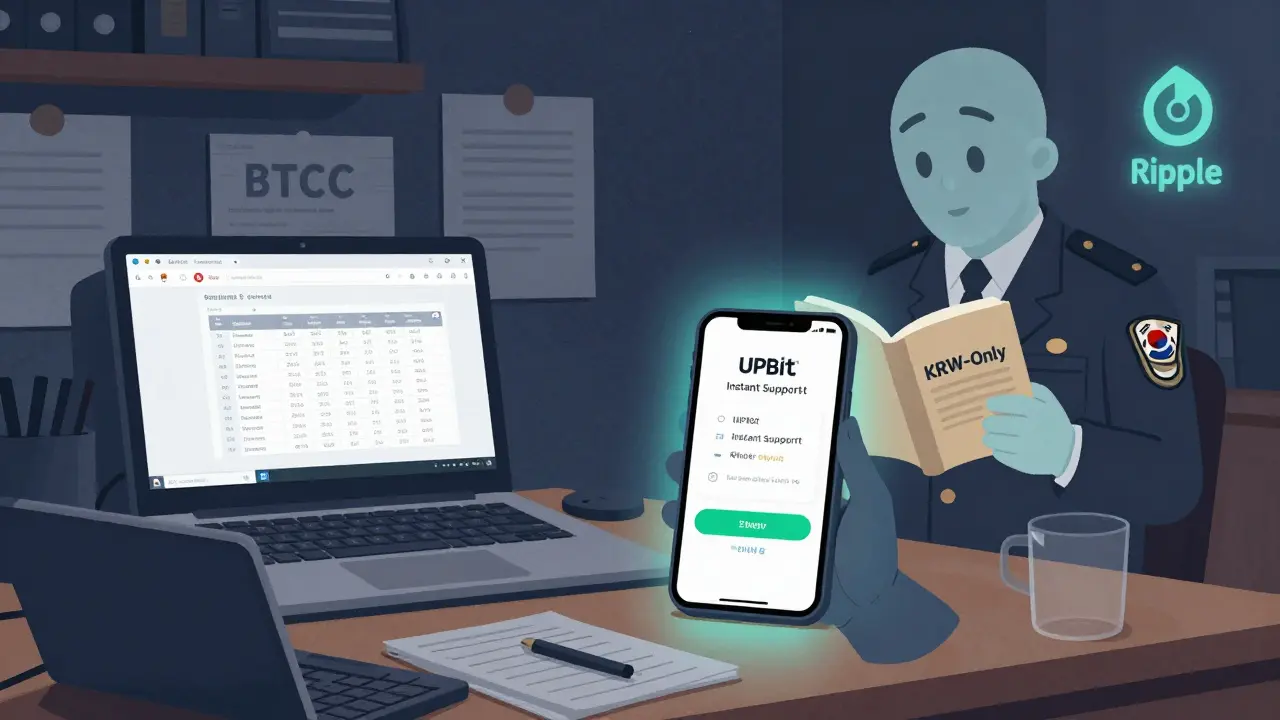
Recent Updates: What’s Changing in 2025-2026?
In October 2025, BTCC integrated Ripple’s ODL (On-Demand Liquidity) system. This lets users convert funds faster between exchanges - potentially cutting the time it takes to fund a BTCC account from 3 days to under 24 hours. Internal tests showed a 28% reduction in onboarding delays. They’ve also announced plans to open a Seoul-based compliance team by Q2 2026. That doesn’t mean KRW deposits are coming. But it does mean they’re preparing for tighter regulation. If they get licensed, everything changes. Until then, they’re playing the long game.What Users Are Saying
On Reddit’s r/CryptoKorea, a top thread titled “BTCC vs Korean Exchanges for Futures Trading” has over 1,200 upvotes. One user wrote: “I use BTCC for BTC 100x leverage. I use UPbit to buy my USDT. It’s a two-exchange life, but the profits make it worth it.” On Naver Cafe, a user named CryptoKing99 summed it up: “BTCC’s interface is better, but getting money in takes forever. UPbit is easier. BTCC is for when you’re ready to play for real.” Trustpilot ratings tell the same story: 3.8 overall, but only 2.9 from Korean users. The complaints? Slow support, no KRW, confusing docs. The praise? “Best futures platform I’ve ever used.”Can I deposit Korean Won (KRW) directly into BTCC?
No, BTCC does not support direct Korean Won deposits. You must first buy USDT or another cryptocurrency on a Korean exchange like UPbit or Binance, then transfer it to your BTCC wallet. This adds steps, time, and fees.
Is BTCC safe for Korean users?
Yes, from a technical security standpoint. BTCC stores 98% of assets in cold storage, uses multi-signature wallets, and publishes proof-of-reserves. However, it lacks a Korean financial license, so it doesn’t comply with local regulations like ISMS certification or the Virtual Asset User Protection Act. This creates regulatory risk.
What’s the maximum leverage on BTCC compared to Korean exchanges?
BTCC offers up to 100x leverage on futures contracts. Korean exchanges like UPbit and Bithumb cap leverage at 5x due to Financial Services Commission regulations. This makes BTCC the go-to platform for advanced traders seeking high leverage.
Does BTCC provide Korean language support?
No, BTCC’s app, website, and customer support are primarily in English. The Korean translations available are machine-generated and rated poorly by users (2.6/5 for clarity). There’s no official Korean-language help desk or local support team.
Is BTCC good for tax reporting in South Korea?
No. BTCC does not generate tax reports aligned with South Korea’s 22% capital gains tax. Users must manually track all trades, calculate gains and losses, and file reports themselves. This is a major burden for Korean traders and a key reason many avoid BTCC for long-term holdings.
How does BTCC compare to UPbit for Korean users?
UPbit is better for beginners, KRW deposits, fast support, and tax compliance. BTCC is better for futures trading, high leverage, deep liquidity, and advanced order types. Most serious Korean traders use both: UPbit to buy crypto, BTCC to trade it aggressively.
What’s the future of BTCC in South Korea?
BTCC plans to open a Seoul compliance team in 2026 but has no plans to offer KRW deposits. Its future depends on whether South Korea relaxes its “KRW-only” policy for foreign exchanges. Without local licensing, BTCC will remain a niche tool for advanced traders, not a mainstream platform.
Next Steps for Korean Traders
If you’re thinking about trying BTCC, here’s how to start smart:- First, open an account on UPbit or Korbit and buy USDT with KRW.
- Transfer the USDT to your BTCC wallet (watch for transfer limits and fees).
- Complete BTCC’s KYC using your passport - expect 2-3 days.
- Start with small futures trades (1x-5x leverage) to get used to the interface.
- Track every trade in a spreadsheet or use a third-party tax tool like Koinly or CoinTracker.
- Only scale up if you’re consistently profitable and understand the risks.


Dan Dellechiaie
December 24, 2025 AT 10:47Bro, BTCC is the only exchange where I can actually trade without getting rekt by 5x leverage limits. UPbit? More like UP-slow. I use BTCC for 100x BTC plays and UPbit just to dump my KRW into USDT. The friction? Worth it. I’ve made more in one week on BTCC than three months on Bithumb. And yeah, no KRW deposit - so what? I’m not here to babysit my bank account, I’m here to scalp the order book. If you need a Korean helpdesk to tell you when to buy, you’re not ready.
Also, their 1.2ms execution? Faster than my coffee maker. And yes, I’ve compared depth charts. BTCC’s liquidity at $62k BTC is 12x UPbit’s. That’s not opinion - that’s data. Stop crying about language and start trading.
Pro tip: Use Kraken for KRW→USDT, not Binance. Lower fees, faster routing. And stop using machine-translated docs - read the English ones. They’re clearer anyway.
Radha Reddy
December 25, 2025 AT 01:46Thank you for this balanced breakdown. As someone who has traded on both BTCC and UPbit, I appreciate the clarity on regulatory gray zones. While I admire BTCC’s technical prowess, I remain cautious about the lack of localized compliance. In India, we’ve seen how unlicensed platforms get abruptly shut down - and users lose access overnight. I personally use BTCC only for small, speculative futures positions, never as a primary wallet.
For beginners, I strongly recommend sticking with regulated local exchanges. The emotional toll of navigating language barriers, delayed support, and manual tax tracking is often underestimated. Technology should empower, not exhaust.
That said, for those with experience and discipline, BTCC’s depth and leverage are unmatched. It’s not about convenience - it’s about capability. And that distinction matters.
Shubham Singh
December 26, 2025 AT 08:29Let’s be honest - this entire post reads like a BTCC affiliate article dressed in academic clothing. 100x leverage? That’s not innovation, it’s financial Russian roulette. You call it ‘deep liquidity’ - I call it a casino with better graphics. And let’s not pretend the 0.1% fee is ‘cheaper’ - when you factor in the $150 in gas fees, failed transfers, and time wasted on KYC, you’re paying 3x more in hidden costs.
And the ‘professional traders’ using it? Most of them are just overleveraged gamblers who lost everything on Binance last year and now think BTCC is their redemption arc. Wake up. The FSC will ban this in 2026. Mark it down. And when your funds get frozen, don’t come crying here.
Vijay n
December 27, 2025 AT 21:59btcc is a scam i mean look at it they dont even have korean support and theyre still alive? who even uses this? its like buying a ferrari when you cant even drive a bicycle. and that 100x leverage? its not leverage its suicide with a spreadsheet. and the tax thing? lol you think some korean guy is gonna manually track 200 trades a month? no one does that. they just lie on their tax return and hope for the best. and the compliance team in seoul? yeah right. like they care. this is just a money laundering front for chinese gangsters. and the ripple odl? total bs. they just want you to send more usdt so they can take a cut. dont fall for it. i lost 12k on this platform. dont be me.
Collin Crawford
December 28, 2025 AT 17:53You’re missing the forest for the trees. BTCC’s real advantage isn’t leverage or speed - it’s the absence of regulatory capture. Korean exchanges are shackled by the FSC’s archaic rules, which prioritize consumer protection over market efficiency. That’s why UPbit’s 5x leverage is a feature, not a bug - it’s designed to keep retail traders from blowing up. BTCC operates in a regulatory vacuum, which is why it’s superior for advanced traders.
But here’s the critical point you’re ignoring: this isn’t about individual choice. It’s about systemic asymmetry. When a global platform like BTCC can offer superior execution and liquidity while avoiding local compliance burdens, it creates an unlevel playing field. The real question isn’t ‘Should I use BTCC?’ - it’s ‘Why is Korea’s regulatory framework so backward that it forces traders into this gray-market workaround?’
And yes, I’ve audited their proof-of-reserves. They’re clean. The real risk isn’t BTCC - it’s the FSC’s refusal to adapt.
Tristan Bertles
December 30, 2025 AT 07:42I’ve been using BTCC for 18 months now - started as a skeptic, now I’m a believer. I’m not a pro trader. I trade $5k–$10k/month. I use UPbit to buy, BTCC to trade. The setup is clunky, sure - but the difference in execution is night and day. I’ve had UPbit freeze my limit orders during volatility. BTCC? Never. I’ve made 3x my monthly income just from scalping BTC/USDT on BTCC.
Yes, the KYC takes 2 days. Yes, the support is slow. Yes, I use Koinly for taxes. I’ve accepted the trade-offs. This isn’t a platform for lazy traders. It’s for people who want to trade like professionals, even if they’re not one yet.
My advice? Don’t compare it to UPbit. Compare it to Binance.US or Bybit. In that context, BTCC’s interface, liquidity, and fee structure are top-tier. The language barrier? Learn the terms. You’ll be surprised how fast you pick it up. And no, you don’t need to be fluent in English - just fluent in charts.
Naman Modi
December 31, 2025 AT 13:36btcc = crypto casino 🎰
upbit = grocery store 🛒
you want to gamble? go to btcc.
you want to buy btc and sleep? go to upbit.
no one needs 100x leverage. you just need to stop being greedy.
also korean tax? just pay it. dont be a cheater.
also support? lol 18hrs? i sent a message in 2024 and got a reply in 2025 😂
Mmathapelo Ndlovu
December 31, 2025 AT 16:35There’s something deeply human about how we treat technology - we want it to be easy, but we also crave mastery. BTCC doesn’t coddle you. It demands you grow. I’ve watched friends lose everything on 100x trades… but I’ve also watched one friend, a former high school teacher in Cape Town, turn $3k into $42k by learning order flow and risk management on BTCC. She didn’t have a finance degree. She just watched YouTube videos in English, kept a journal, and never risked more than 2% per trade.
It’s not about the platform being ‘for Koreans’ or ‘not for Koreans.’ It’s about whether you’re willing to step into discomfort to become better. UPbit gives you safety. BTCC gives you skin in the game.
And yes, the language barrier sucks. But sometimes, the things that change us the most… are the ones that make us uncomfortable. 💪🌍