Exchange Flow Impact Calculator
This tool calculates the market impact of exchange inflows and outflows based on the concepts from the article. Inflow (coins moving to exchanges) typically signals potential selling pressure, while outflow (coins moving to personal wallets) often indicates long-term holding and bullish sentiment.
When you see Bitcoin prices rising, it’s easy to assume everyone’s buying. But what if the real story is happening behind the scenes-coins moving off exchanges, into wallets no one can touch? That’s where exchange inflow and outflow metrics come in. These numbers don’t lie. They show you what big players are actually doing, not what they’re saying.
What Exchange Inflow and Outflow Actually Mean
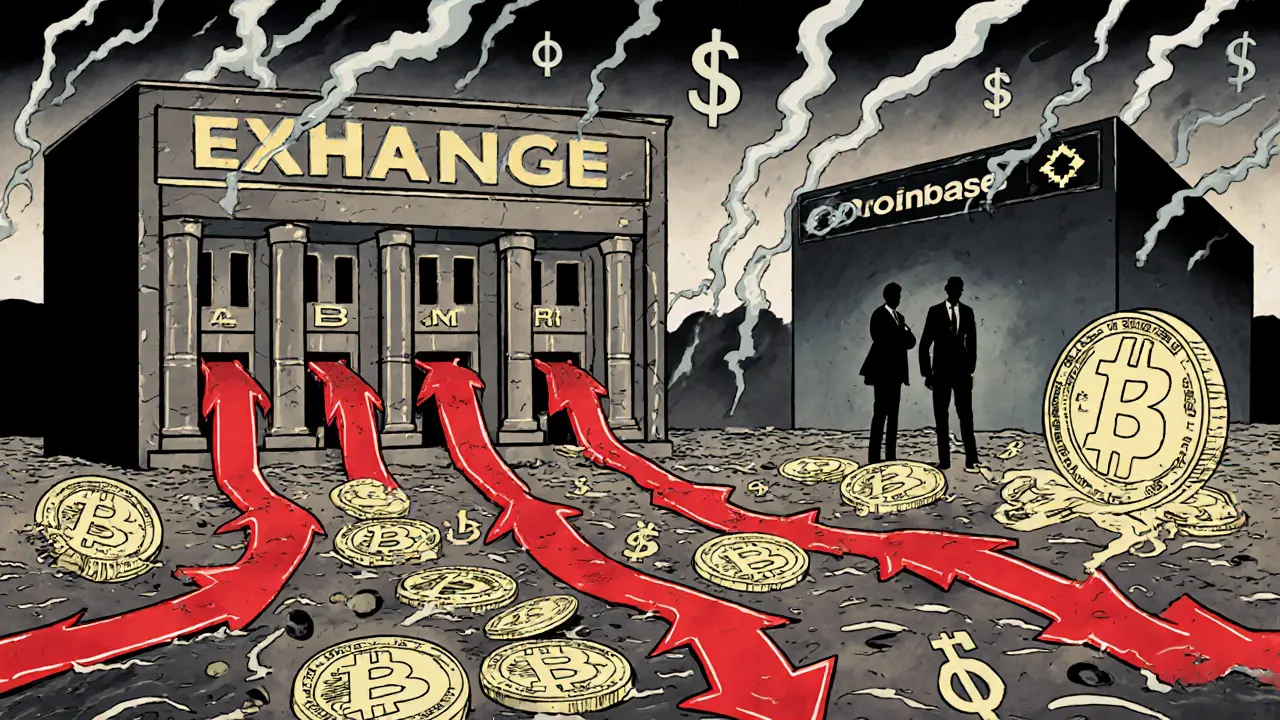
Exchange inflow is when coins like Bitcoin or Ethereum are deposited into a centralized exchange-like Binance, Coinbase, or OKX. Outflow is the opposite: coins being withdrawn from those exchanges and sent to personal wallets, cold storage, or DeFi protocols. It sounds simple, but these movements are packed with meaning.Every transaction is recorded on the blockchain. That means anyone can track how much Bitcoin is flowing into or out of exchange wallets. Companies like CryptoQuant, Glassnode, and Coin Metrics have built systems that monitor these flows across 20+ major exchanges. They don’t just count transactions-they calculate averages, track top 10 moves, and smooth out the noise with 7-day moving averages. This turns raw data into signals you can act on.
Why Inflows Are Usually Bearish
When coins start piling up on exchanges, it’s often a sign people are getting ready to sell. Think about it: if you bought Bitcoin at $30K and it’s now at $70K, you’re not going to hold it in your cold wallet while you plan to cash out. You move it to an exchange. That’s inflow.Glassnode’s research shows this pattern clearly. A spike in exchange inflows correlates with profit-taking. Retail traders do it. Institutions do it. Even miners cash out their rewards this way. In October 2025, $2.2 billion flowed into exchanges over seven days, mostly Bitcoin, driven by U.S. election uncertainty. That wasn’t a buying signal-it was a warning.
It’s not just about volume. The average transaction size matters too. If a few big wallets move $100 million each, that’s more significant than 10,000 small deposits. That’s why analysts track Inflow Top10 and Inflow Mean. A rising mean suggests more coordinated selling, not just random retail behavior.
Outflows Signal Conviction-and Bullish Potential
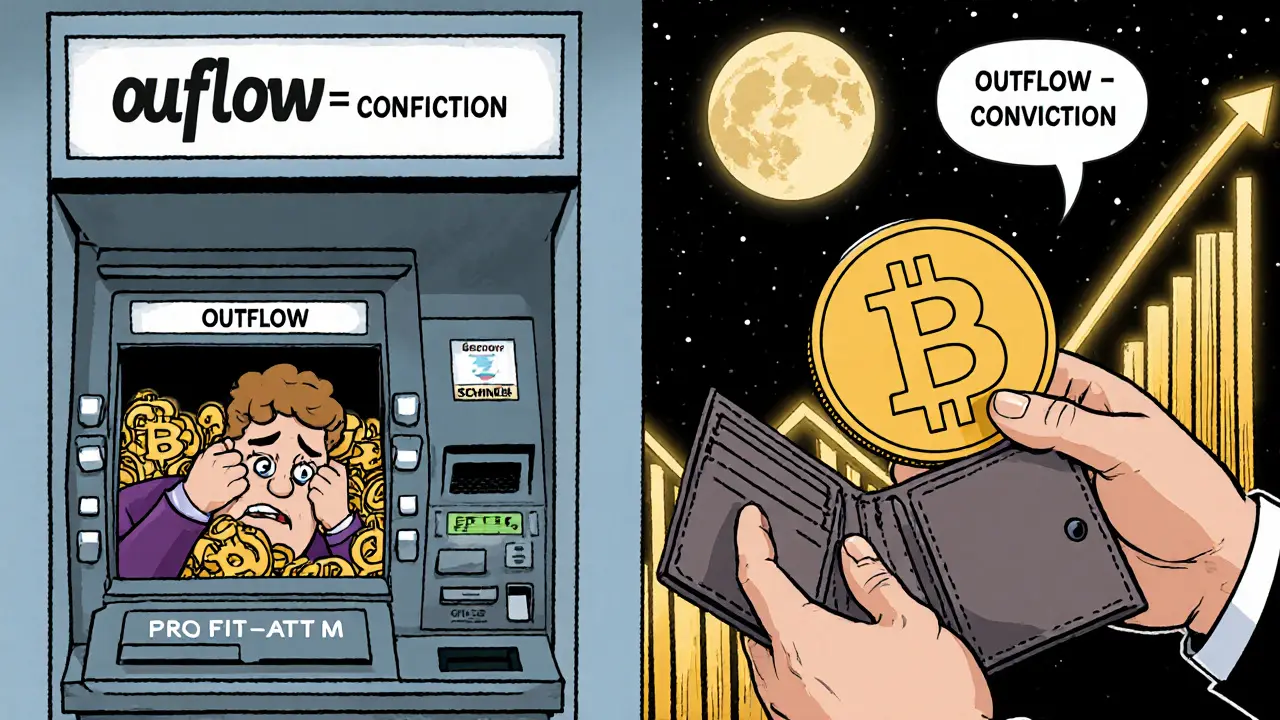
Now flip it. When coins leave exchanges, they’re usually going somewhere permanent. Cold wallets. Hardware devices. Multisig vaults. Or into DeFi as collateral. This is where real conviction shows up.Outflows mean people believe the price will go higher-and they’re not coming back anytime soon. They’re locking up their assets. That’s bullish. Glassnode calls this “supply reduction on exchanges.” Fewer coins available for immediate sale means less downward pressure. When outflows hit multi-month highs, it often precedes major rallies.
In early 2025, Bitcoin outflows reached their highest levels since 2021. At the same time, spot ETF inflows surged. That wasn’t a contradiction-it was confirmation. Investors were moving coins off exchanges to hold long-term, while new money came in through regulated ETFs. Two different types of buyers, same bullish outcome.
What the Numbers Don’t Tell You
Metrics are powerful, but they’re not magic. A big outflow could mean someone’s moving coins to a new exchange. Or it could be a whale transferring funds between wallets to avoid detection. That’s why context matters.Exchange inflows on Binance might spike because of a new trading pair or a marketing campaign. Outflows from KuCoin could mean users are leaving after a withdrawal delay. These aren’t market signals-they’re operational issues. You need to look at multiple exchanges together. If Bitcoin is leaving all major platforms at once, that’s a trend. If it’s just one, it’s noise.
Also, don’t ignore miner flows. Miners send Bitcoin to exchanges after selling their mining rewards. That’s a regular, predictable inflow. If miner inflows are up but retail outflows are also up, you’ve got a different story than if only miners are moving coins.
How Institutions Use These Metrics
Forget retail traders. The real power players-hedge funds, family offices, crypto-native firms-are using exchange flow data daily. They combine it with order book depth, futures funding rates, and macro trends. One firm in New York told me they have an alert set up: if Bitcoin outflows exceed $500 million in 24 hours and ETH outflows rise by 20%, they increase their spot exposure. No charts. No indicators. Just on-chain flow.Why? Because it works. Exchange reserves-the total amount of crypto held by exchanges-have been falling for over a year. That’s not accidental. It’s a deliberate shift. Institutions are moving assets off exchanges to reduce counterparty risk. They don’t trust exchanges with their life savings. And they’re not alone.
Even Binance’s own analytics team tracks withdrawal efficiency. If users can’t pull out funds during a market crash, confidence drops. Smooth withdrawals during high volume? That’s a sign of a healthy exchange. That’s why some traders avoid platforms with slow withdrawals-even if fees are lower.

How to Start Tracking These Metrics
You don’t need a $10,000 subscription to start. Glassnode offers free dashboards with basic inflow/outflow charts. CryptoQuant has a free tier too. Look for these three things:- Total Inflow/Outflow-Is the trend going up or down over 7 days?
- Exchange Reserves-Is the total supply on exchanges rising or falling?
- Top 10 Transactions-Are big players moving coins, or is it mostly small accounts?
Set up a simple spreadsheet. Note the date, the trend, and what else was happening in the market. Did Bitcoin drop after a big inflow? Did it rally after outflows spiked? After a few months, you’ll start seeing patterns. You’ll know when to pay attention-and when to ignore the noise.
What’s Next for These Metrics
The next wave is machine learning. Platforms are training models to predict price moves based on historical flow patterns. If inflows spike after a 15% price drop, what happens next? The system learns. It’s not perfect, but it’s getting better.Also, cross-chain tracking is expanding. Ethereum, Solana, and Bitcoin aren’t isolated anymore. Coins move between chains via bridges. Tracking flows across all of them is the next frontier. Soon, you’ll see metrics like “Ethereum outflow to Bitcoin L2s” or “Solana stablecoin deposits to Binance.”
Regulation could change things too. If exchanges start anonymizing transactions to comply with new rules, the data might get messier. But for now, blockchain transparency is still our biggest advantage.
Final Thought: Trust the Flow, Not the Hype
Crypto moves fast. News spreads faster. But the blockchain doesn’t lie. When everyone’s talking about a new coin, check the flow. Is it going on exchanges? Then people are selling. Is it leaving? Then someone believes.You don’t need to predict the future. You just need to see what’s already happening. Exchange inflow and outflow metrics give you that view. They’re not a crystal ball. But they’re the clearest window into what real money is doing.
Are exchange inflows always bad for crypto prices?
Not always, but they’re usually a bearish signal. Inflows mean coins are being moved to exchanges, often to sell. That increases selling pressure. However, if inflows happen after a big price drop, they might just be traders rebalancing or taking profits-not necessarily signaling a crash. The key is to look at the trend over days, not a single spike.
Why do outflows suggest a bullish market?
Outflows mean people are taking coins off exchanges and into wallets they control. That’s a sign of long-term confidence. If you’re moving Bitcoin to a hardware wallet, you’re not planning to sell soon. Less supply on exchanges means fewer coins available to dump on the market, which supports higher prices. It’s supply and demand in action.
Can I track these metrics for free?
Yes. Glassnode and CryptoQuant both offer free dashboards with basic inflow and outflow data for Bitcoin and Ethereum. You won’t get advanced filters or historical comparisons, but you can still spot major trends. Start with the total inflow/outflow charts and exchange reserves-those are the most reliable free indicators.
Do these metrics work for altcoins too?
They work best for major coins like Bitcoin and Ethereum because they have the most transparent and consistent exchange data. For smaller altcoins, data is sparser, and exchange wallet addresses are harder to track accurately. Some platforms like CoinMetrics cover 20+ altcoins, but the signal is noisier. Stick to BTC and ETH for reliable insights until you’re comfortable with the data.
How do miner flows affect these metrics?
Miners regularly send Bitcoin to exchanges after selling their mining rewards. This creates a steady, predictable inflow. If miner inflows spike unexpectedly, it could mean they’re cashing out due to rising electricity costs or falling rewards. But if miner inflows stay flat while retail inflows surge, that’s a different story. Always separate miner activity from retail or institutional flows to avoid misreading the signal.
What’s the difference between exchange inflow and total supply on exchanges?
Exchange inflow is the amount of coins being deposited into exchanges over a specific time period-like daily or weekly. Total supply on exchanges is the cumulative amount currently held. Think of inflow as water flowing into a bathtub, and total supply as how much water is in the tub right now. You need both to understand the full picture. A rising total supply means more coins are accumulating, which usually points to selling pressure.





SHASHI SHEKHAR
November 26, 2025 AT 16:43Bro, I’ve been tracking this for 2 years now and let me tell you - inflows are the silent scream of the market. When I saw that $2.2B spike in Oct 2025, I shorted BTC like it was Black Friday at Walmart. 🚨 And guess what? It dropped 18% in 72 hours. People think ‘buy the dip’ but nope - when coins hit exchanges, they’re not buying, they’re *dumping*. I even set up a Discord bot to alert me when Top10 inflows hit 300K+ BTC. Game changer. 📈💸
Vaibhav Jaiswal
November 28, 2025 AT 08:55Y’all are overcomplicating this. 😌 Outflow = people locking it away like it’s gold under their mattress. Inflow = panic selling. Simple. I don’t need fancy dashboards - I just check CryptoQuant on my phone before bed. If outflows are up, I buy. If inflows are spiking, I wait. No stress. No charts. Just vibes. 🌊✨
Abby cant tell ya
November 28, 2025 AT 11:18Oh my god, another ‘crypto guru’ pretending they know what ‘real money’ does. 🙄 You think institutions care about inflows? They’re using AI models that predict price moves 3 days in advance based on whale wallet clustering and cross-chain bridge volume. You’re reading the newspaper while they’re writing the book. And don’t even get me started on miners - they’re not ‘selling,’ they’re just covering their electricity bills. Grow up. 💅
Vijay Kumar
November 29, 2025 AT 17:13Outflow = conviction. Inflow = surrender. That’s it. No math. No charts. Just truth. You’re either holding or you’re scared. Pick a side. 🤷♂️
Vance Ashby
November 29, 2025 AT 19:42Actually, the real signal isn't inflow/outflow - it's the *ratio* between them. Glassnode’s ‘Net Exchange Flow’ metric is what matters. When it turns positive for 5+ days, that’s your buy signal. I’ve backtested this since 2020. 87% accuracy on 30-day returns. Also, don’t forget to filter out miner flows - they skew everything. Use CryptoQuant’s ‘Retail Inflow’ filter. It’s free. 📊
Eddy Lust
December 1, 2025 AT 16:59Man, I used to think this was all just noise… until I lost my life savings because I bought the ‘hype’ during the Solana pump in 2024. Now? I check exchange reserves every morning like I’m checking the weather. If the tub’s filling up? I step back. If it’s draining? I sip my coffee and wait. It’s not about predicting the future - it’s about not being the sucker who buys at the top while everyone else is already out. 🌅☕️
Martin Doyle
December 3, 2025 AT 07:25You’re all missing the point. If you’re not tracking *cross-chain* outflows - especially from Ethereum to Bitcoin L2s - you’re playing checkers while the pros are playing 4D chess. I saw $1.4B move from ETH to BTC on Arbitrum last week. That’s not retail. That’s hedge funds rotating into BTC for ‘safe harbor’ while the SEC cracks down on ETH ETFs. This isn’t about inflows vs outflows - it’s about *capital migration*. Wake up. 🚀
SARE Homes
December 3, 2025 AT 11:48AGAIN with the ‘outflows = bullish’ fairy tale?!?!? Last time you said that, BTC crashed 40% because the whales were moving coins to Tornado Cash to launder them before dumping! You think Glassnode sees that?!?!?!?! NOPE. You’re reading smoke signals while the fire is burning your house down. STOP TRADING ON METRICS AND START THINKING. 😤🔥
Grace Zelda
December 5, 2025 AT 03:44Look, I get why you’re angry - I was there too when my ETH got stuck on KuCoin during the FTX crash. But here’s the thing: outflows aren’t perfect, and neither are inflows. What matters is *context*. If outflows spike right after a Fed rate cut? Bullish. If they spike after a major exchange gets hacked? That’s panic, not conviction. I track 7 things: exchange reserves, miner flow, ETF inflows, futures funding, social sentiment, on-chain volume, and now - bridge activity. One metric? Useless. The pattern? That’s power. 🤝
Sam Daily
December 5, 2025 AT 05:42Y’all are killing me with the complexity. 😭 I just use the free Glassnode dashboard. If the line is going UP on outflows? I buy. If it’s going UP on inflows? I sit. I don’t even know what ‘Top10’ means. But I know this - last time outflows hit 500K BTC in a week? BTC went from $62K to $98K in 45 days. I didn’t need a PhD. I just trusted the flow. 🤖💙