Blockchain Real Estate Cost Calculator
Calculate how much you could save using blockchain for real estate transactions compared to traditional methods.
Property Details
Transaction Time
Typical transaction times for blockchain vs traditional
Your Savings & Returns
Estimated Savings:
Traditional Costs
Total Fees:
Transaction Time: 30-45 days
Blockchain Costs
Total Fees:
Transaction Time: 24-72 hours
Annual Rental Income:
Based on $ property with % yield
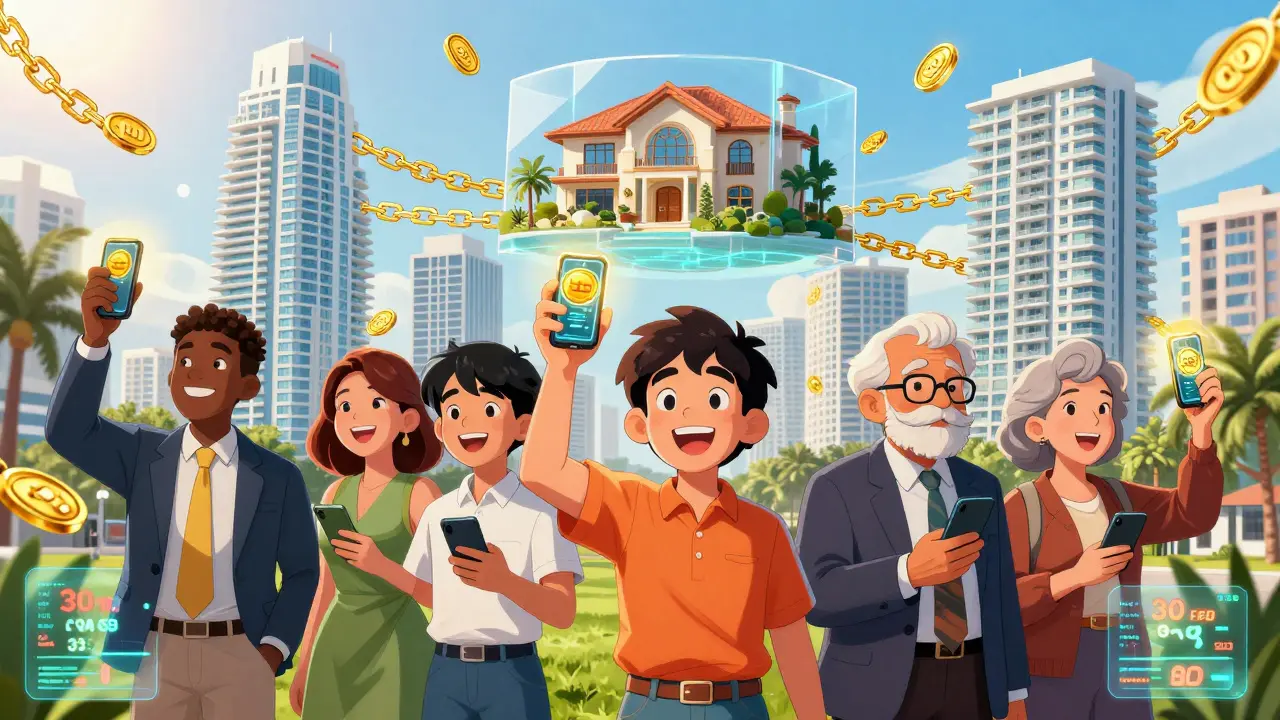
By 2025, buying a house isn’t just about finding the right neighborhood or negotiating a price anymore. It’s about unlocking a share of a building with a few clicks, settling a deal in hours instead of months, and knowing every step of the transaction is locked in permanently - no paper, no middlemen, no fraud. This isn’t science fiction. It’s happening right now, and blockchain is the reason.
What Blockchain Is Actually Doing to Property Markets
For decades, real estate has been one of the most illiquid, slow, and expensive asset classes. Closing a home sale took 30 to 45 days. Fees ate up 5% to 10% of the sale price. Title fraud cost billions annually. And if you weren’t rich enough to buy a whole property, you were locked out.
Blockchain changes all that. It turns property into digital tokens - like shares in a company - that can be bought, sold, or traded on secure, public ledgers. A $2.5 million villa in Dubai? Now you can own $25,000 of it. A commercial office tower in Chicago? Investors in Berlin, Singapore, or Lagos can buy fractions without crossing borders or dealing with foreign lawyers.
According to Fibree’s 2025 report, over 844 blockchain-based real estate products are now active worldwide. That’s up 13% from last year. And it’s not just startups. Major players like Propy, RealT, and BrickMark are handling millions in transactions monthly. Dubai’s land registry processes 97% of its property deals in under 24 hours. In Miami, a $22.5 million penthouse sold entirely in Bitcoin in January 2025. These aren’t outliers. They’re becoming the norm.
How Tokenization Is Breaking Down Barriers
Tokenization is the engine driving this shift. Instead of owning a deed, you own a digital token that represents a percentage of a property. That token can be traded on secondary markets, just like stocks. This opens up real estate to millions who could never afford a whole home.
Before, only institutions and ultra-high-net-worth individuals could invest in commercial real estate. Now, a teacher in Ohio can invest $1,000 in a portfolio of apartment buildings in Atlanta. A college student in India can earn rental income from a condo in Lisbon. The barriers are gone.
Tokenized REITs - real estate investment trusts built on blockchain - are growing at 89% year-over-year. Mordor Intelligence estimates the total value of tokenized real estate assets hit $2.08 trillion in 2025, up from $1.87 trillion in 2024. That’s not speculation. That’s real money moving.
And the returns? Investors in tokenized properties report average annual yields between 6% and 9%, often higher than traditional REITs, with dividends paid automatically through smart contracts - no bank delays, no paperwork.
Smart Contracts: The Invisible Hand Closing Deals
Behind every fast, cheap transaction is a smart contract. These are self-executing codes that run when conditions are met. No lawyer needs to review signatures. No escrow agent holds funds. The contract does it all.
Here’s how it works: You find a property listed on a blockchain platform. You send payment. The system checks: Is your identity verified? Are taxes paid? Is the title clear? Is the buyer from a compliant jurisdiction? If yes - boom - ownership transfers in seconds. The seller gets paid. The platform takes its 1.5% fee. The deed is updated on-chain. Done.
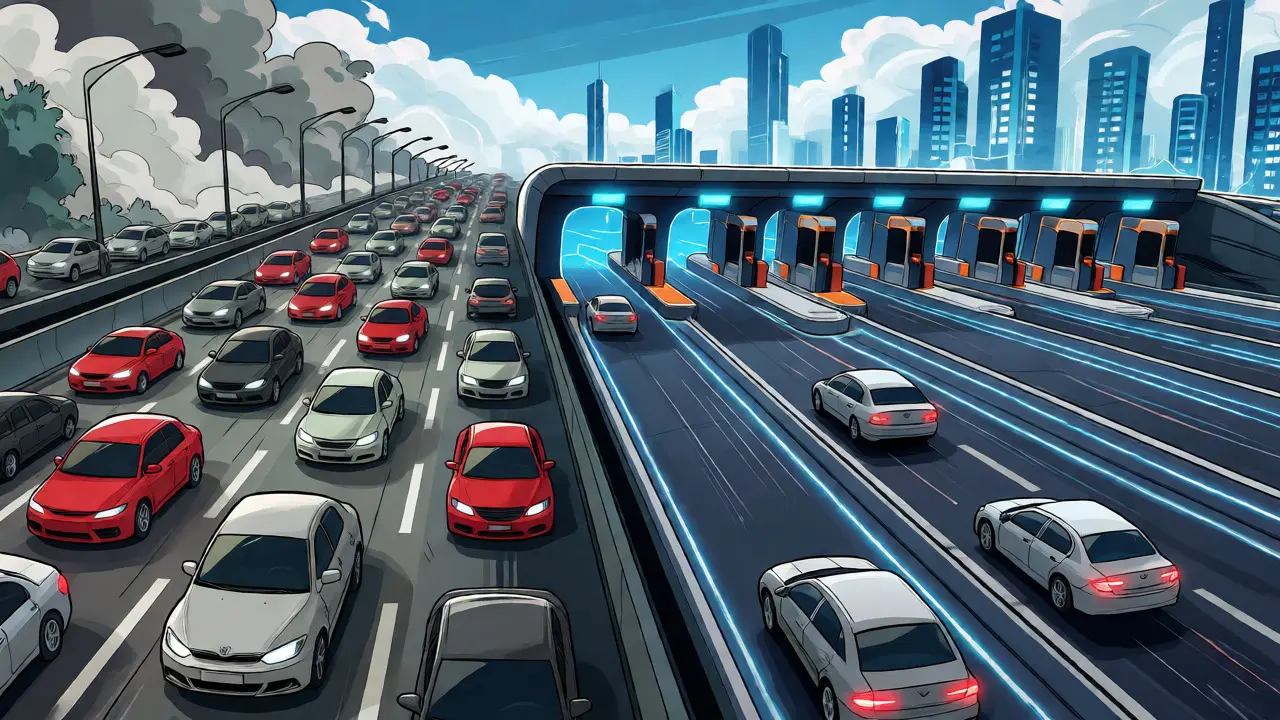
Traditional closing costs? 5% to 10%. Blockchain? 1.5% to 3%. Realtor.com’s 2025 analysis found buyers saved an average of $28,500 on a $1.2 million Miami condo using blockchain - and closed in 18 hours instead of 45 days.
But it’s not perfect. In Texas, a smart contract once failed because it didn’t recognize a zoning change. The buyer lost weeks waiting for a manual override. That’s the risk: code can’t always read human laws. That’s why top platforms now hire legal engineers to audit contracts before launch. IEEE’s 2025 study showed smart contracts reduced title insurance costs by 37% in Illinois - but also created new vulnerabilities if poorly written.

Who’s Leading the Charge? Regions and Adoption
Not everywhere is ready. China bans crypto real estate entirely. Rural areas in the U.S. still rely on paper records. But in places with digital infrastructure and clear rules, adoption is exploding.
North America leads with 38% of global blockchain real estate activity. Miami is the U.S. hotspot, with 22% year-over-year growth. Europe follows at 29%, led by Spain’s coastal towns, Germany’s commercial hubs, and Portugal’s luxury rentals. Asia-Pacific is growing fastest - 57% YoY - thanks to India’s national land blockchain and Singapore’s tokenized investment platforms.
But the real story? The UAE. Dubai has become the global capital for crypto real estate. Nearly half of all luxury developers there accept cryptocurrency. The government doesn’t just allow it - it built the entire registry on blockchain. In Q1 2025, 92% of users rated the system’s transparency as excellent. Only 34% complained about wallet complexity - a solvable UX problem, not a system flaw.
The Hidden Costs and Real Challenges
It’s not all smooth sailing. Regulatory fragmentation is the biggest roadblock. Sixty-eight percent of cross-border tokenized deals still need manual legal checks because each country has different rules. David S. Seltzer of Jones Day calls this a $180 billion compliance burden.
Wallet management is another pain point. New users often lose access because they misplace private keys or don’t understand recovery phrases. In Q1 2025, 12.8% of new users reported temporary lockouts. Platforms are responding with biometric logins, multi-signature wallets, and 24/7 support - but it’s still a barrier for non-tech users.
And then there’s the risk of startup collapse. Gartner predicts 40% to 60% of current blockchain real estate startups will fail by 2027. Many are underfunded, lack legal compliance, or offer no real advantage over traditional systems. Investors need to pick platforms with proven track records - Propy, RealT, and BrickMark are among the most reliable.

What’s Next? AI, DeFi, and the Road to 2030
The next phase isn’t just about buying property. It’s about managing it smarter.
By 2026, AI will analyze tenant behavior, predict maintenance needs, and auto-adjust rent based on local market trends - all tied to the blockchain record. DeFi protocols will let owners use their tokenized property as collateral for loans without selling it. Imagine borrowing $500,000 against your 10% share of a Tokyo apartment - and getting funded in minutes, not weeks.
By 2029, debt tokenization will dominate. Instead of banks issuing mortgages, investors will buy bonds backed by rental income from tokenized buildings. This could unlock $1.2 trillion in new capital by 2028, according to ScienceSoft.
And by 2030, the global blockchain real estate market is projected to hit $3 trillion - roughly 15% of all real estate assets under management. The EU’s MiCA 2.0 framework, launching in January 2026, will standardize rules across 27 countries. The U.S. Commercial Tokenization Act is expected to pass by late 2025. These aren’t distant dreams. They’re deadlines.
How to Get Started in 2025
You don’t need to be a coder to join. Here’s how:
- Choose a platform: RealT (U.S. residential), BrickMark (global commercial), or Propy (international). All offer guided onboarding.
- Complete KYC: Upload ID and proof of address. Takes about 2.3 hours on average.
- Set up a wallet: MetaMask or Coinbase Wallet. Keep your recovery phrase safe - this is your key to ownership.
- Select a property: Filter by location, asset type, or yield. Minimum investments start at $100.
- Buy and monitor: Track rental income, price changes, and voting rights (if applicable) through the platform dashboard.
Training time? Down from 40+ hours in 2022 to just 11.7 hours today. Most platforms now offer video walkthroughs, chatbots, and live support. You’re not buying a tech product. You’re buying a piece of real estate - just with better tools.
Final Reality Check
Blockchain won’t replace all real estate. Rural homes with paper titles? Still need old-school systems. High-risk jurisdictions? Still too unstable. But for anyone looking to invest, diversify, or exit quickly - blockchain is now the fastest, cheapest, and most transparent option.
Dr. Elena Rodriguez of MIT put it best: “Blockchain solved the liquidity paradox in commercial real estate.” For the first time, the world’s most valuable asset class is finally opening up - not just to the rich, but to everyone with a smartphone and a wallet.
The future of property isn’t just digital. It’s democratized. And it’s already here.
Can I really own a fraction of a property using blockchain?
Yes. Tokenization splits ownership into digital shares. You can buy as little as $100 worth of a $2 million building. These tokens are recorded on a blockchain, giving you verifiable, transferable ownership rights - no physical deed needed. Platforms like RealT and BrickMark let you buy, sell, and earn rental income from fractional shares.
Is blockchain property investing safe?
It’s safer than traditional systems in key ways: transactions are immutable, fraud is reduced by 42% in pilot markets, and titles can’t be altered. But risks remain. Poorly coded smart contracts can fail. Wallets can be lost. And unregulated platforms may disappear. Stick to established platforms with legal audits, multi-sig wallets, and 24/7 support. Never invest more than you can afford to lose.
How fast can I close a blockchain property deal?
Typically 24 to 72 hours - sometimes under 18 hours. Compare that to traditional closings, which take 30 to 45 days. Dubai’s system settles 97% of deals in under 24 hours. The speed comes from automating checks: identity, taxes, title, and compliance - all handled by smart contracts instead of lawyers and banks.
What’s the difference between blockchain real estate and traditional REITs?
Traditional REITs are managed by companies that pool investor money to buy properties. You own shares in the company, not the property. Blockchain tokenization gives you direct, verifiable ownership of a percentage of the actual asset. You can trade tokens 24/7 on secondary markets, receive automated rent payments, and vote on property decisions - something traditional REITs don’t offer.
Are there tax implications with blockchain property ownership?
Yes. Tokenized property is treated like any other asset for tax purposes. Rental income is taxable. Selling your token may trigger capital gains. Some platforms now integrate automated tax reporting tools that track income, expenses, and sales events on-chain. But you’re still responsible for filing correctly. Consult a tax professional familiar with digital assets - especially if you’re investing across borders.
Will blockchain replace real estate agents?
Not entirely - but their role is changing. Agents are shifting from transaction facilitators to advisors. They help clients pick the right properties, understand tokenomics, and navigate regulations. Platforms still rely on agents for local market insight and client trust. The difference? Fees are lower, and the agent’s cut is often built into the platform’s 1.5% to 3% fee instead of a 5% to 6% commission.


Kathy Wood
December 15, 2025 AT 05:05Andy Walton
December 17, 2025 AT 03:44Candace Murangi
December 19, 2025 AT 01:27Albert Chau
December 20, 2025 AT 06:04Madison Surface
December 20, 2025 AT 12:46Tiffany M
December 20, 2025 AT 19:25Jessica Petry
December 21, 2025 AT 13:47Patricia Whitaker
December 21, 2025 AT 20:35PRECIOUS EGWABOR
December 22, 2025 AT 01:45Caroline Fletcher
December 22, 2025 AT 07:56