Not all cryptocurrencies survive. In fact, most don’t. Out of the 25,000+ tokens out there, fewer than 1 in 8 have tokenomics that actually hold up over time. So what separates the ones that last from the ones that vanish? It’s not hype. It’s not a fancy whitepaper. It’s tokenomics - the real economic engine behind the token.
What Makes Tokenomics "Good"?
Good tokenomics isn’t about making the price go up overnight. It’s about creating a system where the token’s value grows because people actually use it - not because they’re hoping to flip it. The best models do four things: they limit inflation, create real demand, distribute tokens fairly, and tie token value directly to how much the network is used.
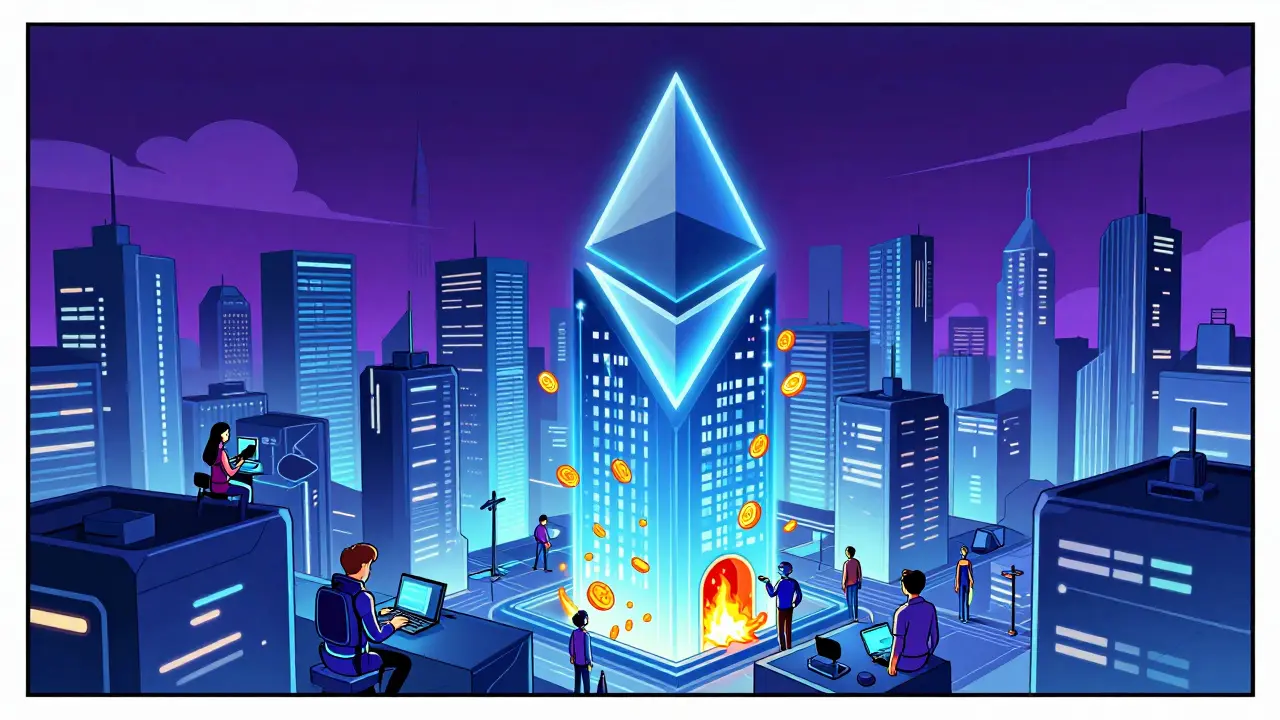
Look at Ethereum. Before 2021, ETH was inflationary - more coins were being minted every year. Then came EIP-1559. Now, every time someone sends a transaction, part of the fee gets burned. That means ETH disappears from circulation. As of October 2025, over 4.1 million ETH have been burned - worth more than $12.8 billion. That’s not a marketing trick. That’s code. And it’s working. Ethereum’s tokenomics score of 92/100 from Messari isn’t random. It’s the result of a system where usage = scarcity.
Binance Coin (BNB): The Power of Predictable Burns
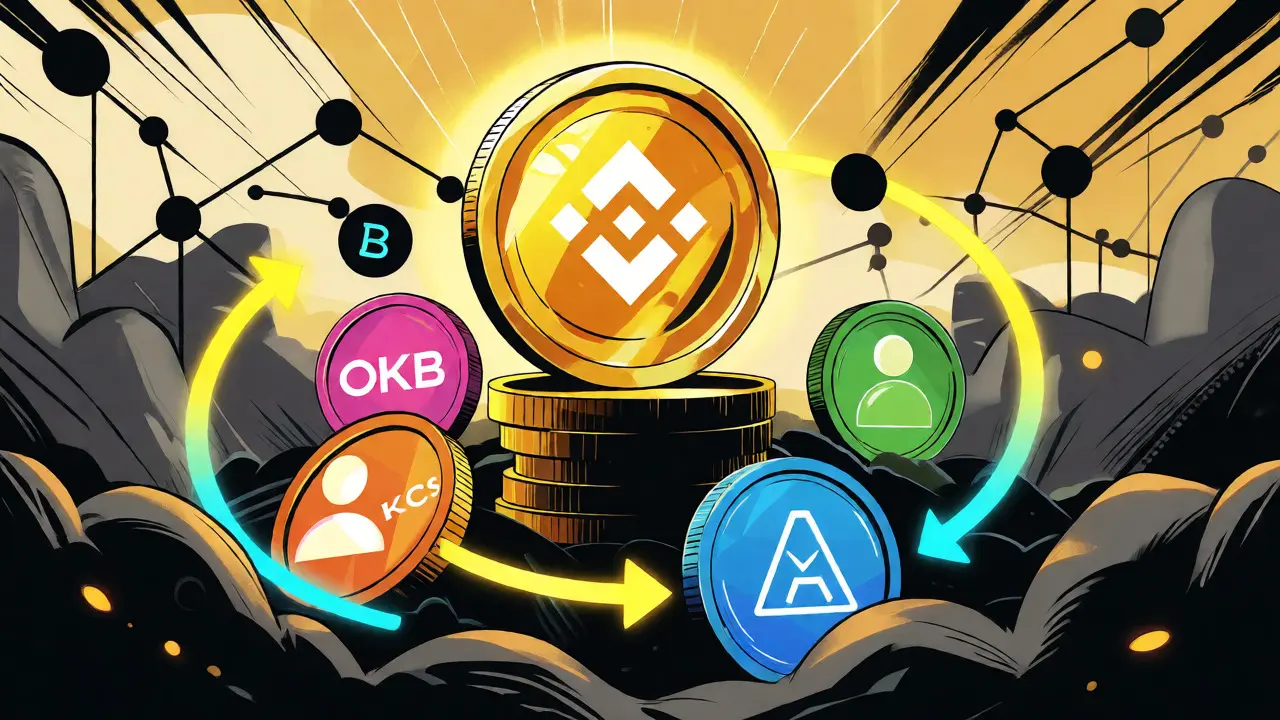
BNB is one of the most straightforward examples of good tokenomics. Every quarter, Binance takes 20% of its profits and burns BNB tokens. Not once a year. Not randomly. Every three months, like clockwork. By July 2025, they’d burned over 20.6 million BNB - reducing the total supply from 200 million to just under 129 million. That’s a 35.6% reduction since launch.
Why does this matter? Because investors know what to expect. There’s no guessing. You can track every burn on Binance’s public ledger. Reddit users call it "one of the few tokens where supply reduction is transparent and verifiable." That kind of predictability builds trust. And trust keeps people holding, even when the market dips.
Avalanche (AVAX): Burning Fees, Not Just Hype
Avalanche doesn’t just burn transaction fees - it burns three types of fees: gas fees, subnet creation fees, and validator staking fees. Since its 2020 launch, AVAX has burned 36% of its original supply. That’s not a side feature. It’s baked into the protocol. As of September 2025, the circulating supply has dropped by 1.2% per year - a measurable deflationary trend.
Dr. Garrick Hileman from Blockchain.com says projects like Avalanche show "sustainable models than those relying on artificial scarcity." Why? Because the burns are tied to real economic activity. People pay to use the network. Those payments destroy tokens. That’s a direct feedback loop: more usage → more burns → scarcer supply → higher value potential. It’s not speculation. It’s economics.
Hyperliquid (HYPE): The Anti-ICO Model
Most tokens start with big private sales. VCs get 20-30% of the supply. Teams get 15-20%. Everyone else gets scraps. Hyperliquid flipped that. In November 2024, they launched with a 1 billion token cap - and gave away 76.3% of it (763 million tokens) to users via airdrops. The team got 12%. Ecosystem development got 11.7%. No VCs. No big early investors.
Why is this revolutionary? Because it aligns incentives. The people using the platform are the ones who own the most tokens. That means they’re motivated to grow the network, not cash out. When you see a token where the majority is held by active users - not whales or insiders - you’re seeing tokenomics designed for long-term health, not quick exits.
Solana (SOL): High Speed, High Risk
Solana’s tokenomics is a mixed bag. On one hand, it’s fast. It handles 65,000 transactions per second. Fees are $0.00025. That’s why memecoins and DeFi apps flock there. Cathie Wood calls it "an organic usage loop." In Q2 2025, SOL processed 1.2 billion monthly transactions.
But here’s the problem: inflation. SOL’s annual inflation rate is still at 5.1%. That means new tokens are being created every year - diluting holders. Critics say this has erased $1.2 billion in value for long-term holders since launch. Worse, 42.7% of all SOL is held by the foundation and early investors. That’s a concentration risk. If they dump, the price crashes.
That’s why Solana’s proposed "SOL 2.0" upgrade in November 2025 is so important. It aims to cut inflation from 5.1% to 3.5% and start burning transaction fees. If it passes, SOL could finally match its speed with sound economics.
Chainlink (LINK): Utility Without a Cap
Chainlink powers over 350,000 node operators and secures $35.7 billion in DeFi value. That’s real utility. But its tokenomics has a flaw: no supply cap. The max supply could hit 1 billion tokens by 2030. That’s a lot of dilution waiting to happen.
But they’re fixing it. In September 2025, Chainlink launched CCIP 2.0 - which burns 10% of all oracle fees paid in LINK. That’s 18 million tokens burned per year. That’s a step in the right direction. It’s not perfect, but it’s evolving. And that’s what good tokenomics looks like: adapting based on real-world use.
Why Most Tokens Fail
Look at the failures. In September 2024, a project with 70% of tokens allocated to the team collapsed within three months after the lock-up ended. The token lost 98% of its value. Why? Because the people who built it had more to gain from selling than from building.
That’s the pattern. Bad tokenomics = misaligned incentives. Team gets too much. No burns. No utility. Just a promise. Investors see through it. And when the tokens unlock? The sell-off begins.
According to CoinGecko, projects with team allocations under 15% have 68% higher survival rates. That’s not a coincidence. Fair distribution isn’t charity. It’s strategy.
What to Look For in 2026
If you’re evaluating a token in 2026, ask these questions:
- Is there a burn mechanism? And is it tied to real usage (like fees), or just a marketing gimmick?
- What percentage of tokens went to the team? If it’s over 15%, be skeptical.
- Is the supply capped? Or is it open-ended?
- Do users actually need the token to use the product? Or is it just a speculative asset?
- Can you verify the burns? Are they on-chain and publicly trackable?
Don’t fall for tokens that say "deflationary" but don’t show you the math. Don’t trust projects that give 20% to the team and call it "fair." Good tokenomics isn’t flashy. It’s quiet. It’s consistent. It’s built to last.
The Bigger Picture
Institutional investors now require independent tokenomics audits before investing. The SEC’s 2025 framework requires full disclosure of token economic models. JPMorgan’s Onyx blockchain now only integrates tokens with at least 25% utility penetration. This isn’t about crypto hype anymore. It’s about real economic design.
Tokenomics has become the filter. The projects that survive aren’t the ones with the biggest Twitter following. They’re the ones with the cleanest math. The ones where every token has a reason to exist - not just to be traded, but to be used.
If you’re investing in crypto in 2026, don’t look at the price chart first. Look at the tokenomics. Because in the end, the economy behind the token is what determines if it lasts - or if it disappears like so many before it.
What is the most important part of good tokenomics?
The most important part is alignment - making sure the people who benefit from the network’s success are the same people who hold the token. That means fair distribution, real utility, and mechanisms like burns that reward usage over speculation. Without this, even the flashiest tech will fail.
Do all good tokenomics models include token burns?
Not all, but the most successful ones do. Burns tied to actual revenue - like BNB’s quarterly burns or Ethereum’s EIP-1559 fee burning - create real scarcity. Tokens without burns can still work if they have strong utility, like Chainlink’s node operator network. But in 2026, burns are the gold standard for proving long-term value.
Can a token with high inflation still have good tokenomics?
Only if inflation is offset by strong demand. Solana has 5.1% inflation, but it’s also processing over a billion transactions a month. That kind of usage can justify higher supply growth - for now. But if demand slows, inflation becomes a liability. Most experts agree: low or zero inflation with burns is more sustainable long-term.
Why does team allocation matter so much?
Because it reveals incentives. If the team holds 25% of tokens and gets access to them after 6 months, they have every reason to pump the price and sell. If they hold 10% with a 3-year vesting schedule, they’re more likely to build something lasting. Projects with team allocations under 15% have a 68% higher survival rate - it’s that simple.
How do I check if a token’s burn is real?
Look for on-chain burn addresses that are publicly visible. Ethereum’s burn address is 0x0000000000000000000000000000000000000000 - anyone can verify it. Binance publishes burn records on its website. If a project says it burns tokens but doesn’t show you the address or transaction history, it’s not real. Use tools like Etherscan or CoinMarketCap’s burn tracker to verify.
Tony Loneman
January 15, 2026 AT 22:32Oh sweet merciful god, another ‘tokenomics guru’ post pretending like burning tokens is some kind of divine revelation. Newsflash: burning ETH is just a fancy way of saying ‘we’re making it harder for regular people to buy in.’ The only thing scarcer now is my patience for this crypto cult nonsense. Binance burns BNB? Cool. So does my toaster burn bread. Does that make it a ‘smart contract’? No. It makes it a toaster.
Lauren Bontje
January 17, 2026 AT 20:06Let me guess - you’re one of those people who thinks Solana’s 5.1% inflation is ‘fine’ because ‘it’s fast.’ Bro, speed without scarcity is just a faster dumpster fire. And don’t even get me started on Chainlink’s ‘no cap’ nonsense. The US dollar has a cap - it’s called the Federal Reserve. Crypto doesn’t get a free pass to print forever and call it ‘utility.’ This is why America’s gonna lose the blockchain war to China - we’re too busy worshipping memes to build real economics.
Stephanie BASILIEN
January 18, 2026 AT 23:48One must, with the utmost intellectual rigor, interrogate the underlying epistemological assumptions embedded within the discourse of ‘token burns.’ Are we to assume that scarcity, as a socio-economic construct, is inherently virtuous? Or is it merely a performative artifact of capitalist myth-making? The burn addresses - while technically verifiable on-chain - remain ontologically ambiguous, functioning as digital relics in a post-scarcity illusion. One wonders whether the user base is truly incentivized… or merely hypnotized by the liturgical spectacle of entropy.
Deb Svanefelt
January 20, 2026 AT 09:24I’ve spent the last three weeks reading every whitepaper, burn tracker, and vesting schedule I could find - and honestly? The most beautiful thing here isn’t the math. It’s the alignment. When the people building the tool are the same people who use it - when the ones holding the tokens are the ones who care about keeping the network alive - that’s not finance. That’s community. That’s trust. And in a world where everything feels broken, that’s the quietest kind of revolution. Thank you for writing this. It felt like someone finally said what we’ve all been thinking but were too afraid to admit out loud.
Dustin Secrest
January 22, 2026 AT 05:49It’s interesting how we conflate ‘burning tokens’ with ‘economic health.’ But isn’t that just like saying a candle that burns faster is a better light source? The real question is: what is the candle illuminating? If the token’s value is derived purely from its scarcity, then we’ve created a Ponzi of entropy - a system that only works as long as new people believe in the ritual of destruction. The real innovation isn’t the burn - it’s the fact that people are finally asking, ‘Why does this exist?’ That’s the first step toward something real.
Shaun Beckford
January 23, 2026 AT 12:05Hyperliquid giving away 76%? That’s not ‘revolutionary,’ that’s a fucking bait-and-switch. You think those airdrop farmers aren’t dumping on day one? They’re not ‘users,’ they’re bots with wallets. The only thing ‘aligned’ here is the marketing team’s bonus. And don’t get me started on ‘fair distribution’ - if your tokenomics requires a PhD in blockchain analytics just to understand it, you’re not building for the people. You’re building for the VC whisperers.
Alexandra Heller
January 24, 2026 AT 01:36People act like token burns are some kind of moral victory. But let’s be real - burning tokens is just a way to make the rich richer. The whales bought in at $0.50. Now the supply is lower, price goes up, they sell at $10. The ‘little guy’ who bought at $8? He’s still holding the bag. And the team? They got their 12% with a 3-year lock-up - they’re just waiting for the next pump. This isn’t economics. It’s theater. And we’re all paying for front-row seats.
myrna stovel
January 25, 2026 AT 21:45I just want to say - thank you for sharing this. It’s easy to get lost in the noise of crypto, but this post reminded me why I even care. It’s not about getting rich. It’s about building something that lasts. I’ve seen too many projects burn out because they were built for hype, not for humans. The fact that people are finally talking about fair distribution and real utility? That gives me hope. Keep going. We’re all learning together.
Chris Evans
January 27, 2026 AT 05:20Let’s not kid ourselves - tokenomics is the new religion. Burns are the sacraments. Etherscan is the holy ledger. And the ‘team allocation under 15%’ mantra? That’s the Ten Commandments of Web3. But here’s the heresy: what if the entire system is just a self-referential loop? What if the only thing that matters is that people *believe* it’s working? The math is elegant, sure - but isn’t that just the opiate of the rationalist? The real value isn’t in the code. It’s in the collective hallucination.
Sarah Baker
January 29, 2026 AT 03:34Just wanted to say - if you’re reading this and feeling overwhelmed by all the jargon and numbers? You’re not alone. I started out thinking I needed to understand every burn address and vesting schedule. Turns out, all I needed was to ask: ‘Who benefits if this works?’ If the answer isn’t ‘the people using it,’ walk away. You don’t need to be a genius to spot a scam. You just need to care about fairness. And that’s enough.