
Imagine you're hunting for a new crypto exchange. You want the speed of Binance but the self-custody safety of Uniswap. You stumble upon Leverj, a platform claiming to bridge the gap between centralized efficiency and decentralized control. Sounds perfect, right? But here's the catch: finding solid information on it feels like searching for a needle in a haystack. With only a handful of user reviews and limited media coverage, Leverj sits in that awkward middle ground-is it an untapped gem or a ghost town?
This review cuts through the noise. We aren't just listing features; we're digging into what Leverj actually offers, how its native token performs, and whether this hybrid model holds up against giants like Coinbase or Bybit. If you're tired of generic "best of" lists and want the real deal on smaller players, keep reading.
The Core Problem: Why Look Beyond the Giants?
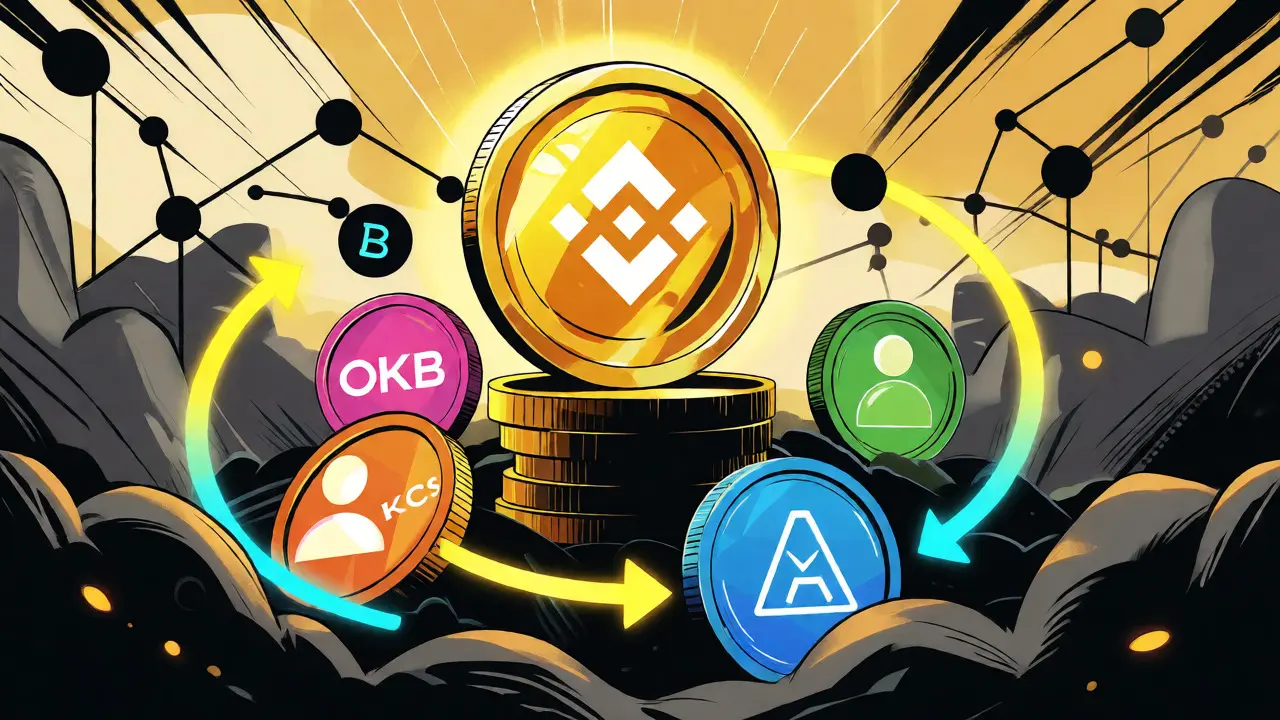
Most traders stick to the big names because they offer liquidity and trust. But there's a growing segment of users who feel uneasy about keeping their funds on massive centralized exchanges (CEXs). They worry about hacks, regulatory freezes, or simply the lack of transparency. That's where Leverj enters the chat. It positions itself as a hybrid exchange, aiming to give you the best of both worlds. The promise is simple: trade with CEX-like speed while maintaining some degree of asset control. But does it deliver, or is it just marketing fluff?
The reality is stark. As of late 2025 and early 2026, Leverj remains a niche player. While exchanges like BingX offer 150x leverage on Bitcoin and Bybit uses AI-driven risk engines to stop millions in fraud, Leverj operates quietly. Its user rating hovers around 3.0 out of 5, based on barely two reviews. That low sample size isn't necessarily bad-it might mean loyal users-but it definitely means you won't find a vibrant Reddit community discussing your daily trades here.
Understanding the Leverj Ecosystem and L2 Token
You can't talk about Leverj without talking about its fuel: the Leverj Gluon (L2) token. Think of L2 as the utility backbone of the platform. It’s not just a speculative asset; it’s designed to facilitate transactions and potentially offer fee discounts or governance rights within the ecosystem. Currently, L2 trades at roughly $0.114. That price point tells a story of stability amidst volatility, but also of limited demand compared to top-tier tokens.
Analysts are split on L2's future. Some optimistic models project prices climbing to $0.1589 by late 2025, driven by potential adoption spikes. Others take a bearish stance, warning that without significant user growth, the token could dip as low as $0.001 in worst-case scenarios. By 2030, predictions range widely, with some seeing modest gains to $0.135 and others seeing stagnation. What does this mean for you? If you buy L2 expecting moonshots like early Bitcoin, you might be disappointed. It’s a play on the platform’s survival and gradual growth, not explosive speculation.
| Feature | Leverj | Binance | Coinbase |
|---|---|---|---|
| Exchange Type | Hybrid (DeFi + CEX elements) | Centralized (CEX) | Centralized (CEX) |
| User Rating (Approx.) | 3.0/5 (Low volume) | 4.5/5 (High volume) | 4.2/5 (High volume) |
| Token Utility | L2 (Gluon) for fees/governance | BNB for fees/burn | None (Native assets) |
| Market Presence | Niche/Emerging | Dominant Global Leader | Institutional Favorite |
| Best For | Users seeking hybrid custody | High-frequency traders | Beginners & Institutions |

Technical Architecture: How Does the Hybrid Model Work?
Here is where things get tricky. Most sources don't spill the technical beans on exactly how Leverj implements its hybrid nature. Typically, these platforms use off-chain matching engines for speed (like a CEX) but settle trades on-chain (like a DEX), or they allow users to retain private keys while trading. This setup reduces counterparty risk-you technically own your coins until the moment of swap. However, the lack of transparent documentation makes it hard to verify if Leverj truly lets you hold keys or if it’s just a white-labeled CEX with a DeFi skin.
For experienced users, this ambiguity is manageable. You test with small amounts. For beginners, it’s a red flag. Established exchanges publish proof-of-reserves using Merkle tree verification, letting anyone audit their holdings. Does Leverj do this publicly and regularly? Information is scarce. Without clear security audits or regular transparency reports, you’re trusting the team’s word over cryptographic proof. In crypto, trust is expensive; verification is cheap. Leverj currently asks for more trust than many competitors.
User Experience and Community Feedback
Let’s be honest: a platform with two reviews is a lonely place. When you join Coinbase or Kraken, you have thousands of blog posts, YouTube tutorials, and forum threads to guide you. If you hit a bug, someone else has likely posted about it. On Leverj, you might be the first person to encounter a specific UI glitch. This isolation impacts the learning curve. You need to be comfortable navigating interfaces without hand-holding.
The sparse feedback also suggests low liquidity. Low liquidity means wider spreads-the difference between the buy and sell price. If you try to sell a large position of an altcoin on Leverj, you might move the market against yourself, losing value on the exit. Compare this to Bybit, which handles billions in daily volume, ensuring tight spreads even for mid-cap coins. Unless Leverj has specific low-fee incentives that offset these slippage risks, high-volume traders will likely find it frustrating.

Risks and Red Flags to Watch
Before you deposit, consider the operational risks. Small exchanges often struggle with customer support response times. If your withdrawal gets stuck, waiting three days for a reply is annoying; waiting three weeks is disastrous. Given the low user count, Leverj likely has a lean support team. Test their responsiveness before moving significant capital.
Another concern is longevity. The crypto graveyard is full of promising projects that vanished due to poor management or market shifts. Leverj’s contradictory price predictions reflect uncertainty about its long-term viability. If the platform fails, recovering funds from a lesser-known exchange can be harder than from a regulated giant like Coinbase, which operates under strict US and EU regulations. Leverj’s regulatory standing is less documented, adding another layer of risk for compliance-conscious investors.
Who Should Use Leverj?
So, who is this for? It’s not for the casual investor who wants a set-and-forget experience. It’s not for the day trader needing instant execution and deep order books. Leverj suits the experimentalist. If you’re already diversified across major exchanges and want to allocate a small portion of your portfolio to explore hybrid tech, it’s a reasonable sandbox. It appeals to those who prioritize theoretical decentralization benefits over proven reliability.
If you are a beginner, skip it. Stick to platforms with robust educational resources and insurance policies. If you are a pro, ensure you understand the smart contract risks involved in any hybrid protocol. Always start with a minimum viable amount to test withdrawals and deposits before committing serious capital.
Is Leverj safe to use?
Safety is relative. Leverj lacks the extensive track record and public audit history of major exchanges like Binance or Coinbase. While its hybrid model may offer custody advantages, the limited user base and sparse reviews make it harder to assess real-world reliability. Treat it as a higher-risk option suitable for smaller allocations.
What is the Leverj Gluon (L2) token used for?
The L2 token serves as the utility asset for the Leverj ecosystem. It is typically used for paying trading fees, participating in governance decisions, or accessing premium features. Its value is tied to the platform's adoption rate, meaning it carries speculative risk similar to other exchange tokens.
Does Leverj require KYC verification?
Requirements vary by jurisdiction and platform updates. Many hybrid exchanges implement KYC (Know Your Customer) checks for fiat on-ramps or higher withdrawal limits. Since specific current policies for Leverj are not widely published, check their official website directly before signing up to avoid surprises during withdrawals.
How does Leverj compare to Uniswap?
Uniswap is a pure decentralized exchange (DEX) operating entirely on-chain, requiring MetaMask or similar wallets. Leverj aims for a hybrid approach, potentially offering off-chain matching for speed while retaining some decentralized features. Uniswap has vastly superior liquidity and community support, whereas Leverj is still establishing its footprint.
Can I withdraw my funds easily from Leverj?
Withdrawal ease depends on network congestion and the exchange's internal processing speed. Due to low user volume, there is little historical data on average withdrawal times. Users should perform a small test transaction to gauge speed and reliability before withdrawing larger sums.



Idowu Emmanuel
September 7, 2026 AT 02:28Great breakdown, really appreciate the honesty here.
I've been looking for something that isn't just another Binance clone but still feels safe. The hybrid model is exactly what I need for my portfolio right now. I'm going to test it with a small amount this week and see how the withdrawal process feels. Thanks for highlighting the liquidity issues though, that's super important for us smaller traders.
Finlay Samms
September 7, 2026 AT 16:28Interesting read! 😊
The comparison table was actually quite helpful. I usually get confused by these hybrid exchanges because they all claim to be "decentralized" but then ask for full KYC like a bank. It seems like Leverj is trying to walk a fine line. If the L2 token has real governance power, that might be worth the risk for some people, even if the volume is low. Just gotta keep an eye on those spreads!
John Lewis
September 7, 2026 AT 22:46This is a very balanced review. As someone who has traded on both CEXs and DEXs for years, I think you hit the nail on the head regarding the technical ambiguity. Most "hybrid" exchanges are just centralized matching engines with a non-custodial wallet integration bolted on. Until they publish their smart contract audits and proof of reserves regularly, I would treat any deposit over $500 as high-risk. The lack of community feedback is also a major red flag; you want a place where if something breaks, you can find a solution on Twitter or Discord immediately. Here, you're likely waiting days for support tickets. Good advice to start with a minimum viable amount.
adam veikkanen
September 9, 2026 AT 03:14You missed the regulatory angle completely.
Leverj has no clear licensing in the US or EU. That means your funds could be frozen without recourse. The "hybrid" label is marketing fluff until proven otherwise by a third-party audit. Stop hyping obscure tokens.
Michael Rubin
September 9, 2026 AT 14:24I agree with the cautionary notes. The user experience seems too sparse for comfort. I prefer platforms where I can see other users' activity or at least have a large knowledge base to fall back on. It feels a bit lonely trading there.
Charlotte Richardson
September 10, 2026 AT 03:03Thank you for such a thorough and empathetic analysis.
It is vital for new investors to understand that "new" does not always mean "better," especially when security protocols are opaque. I encourage everyone reading this to prioritize education over speculation. If you are unsure about the custody model, please do not hesitate to reach out to the community or wait for more transparent reporting from the team. Your financial safety should always come first, regardless of potential fee savings.
Edward Ogunfolaju
September 11, 2026 AT 02:24Look, if you aren't willing to take risks, don't trade crypto! 🚀
Everyone is scared of new exchanges because they got burned by FTX, but that doesn't mean every small player is a scam. Leverj is building something unique. Sure, liquidity is low, but that's where the alpha is! If you wait for Coinbase to list everything, you're already late. Get in early, hold the bag, and wait for the adoption spike. The L2 token is cheap for a reason, but that's an opportunity, not a warning sign. Don't let fear dictate your strategy.
Abid Bhatti
September 12, 2026 AT 20:45They will rug pull eventually
No audits no big backers just vibes and a token that goes nowhere
The devs probably dumped their supply already
Wake up sheep
Sasha Wilde
September 13, 2026 AT 08:41Actually John Lewis is wrong about the tech being ambiguous... most hybrids use off-chain order books anyway so it's standard practice 🤷♂️
Also adam veikkanen is just gatekeeping because he likes regulated exchanges better 🙄
People need to stop trusting banks and start trusting code 🔥
John Martin
September 14, 2026 AT 12:33Hey Edward, I appreciate the enthusiasm, but let's look at the data objectively. 📉
Low liquidity means high slippage, which eats into profits faster than any "alpha" gain. And Abid, while skepticism is healthy, saying "they will rug pull" without evidence is just fear-mongering. Let's give them a chance to prove themselves with actual volume growth. Maybe try a tiny deposit and see how the support responds? No harm done. 🛡️