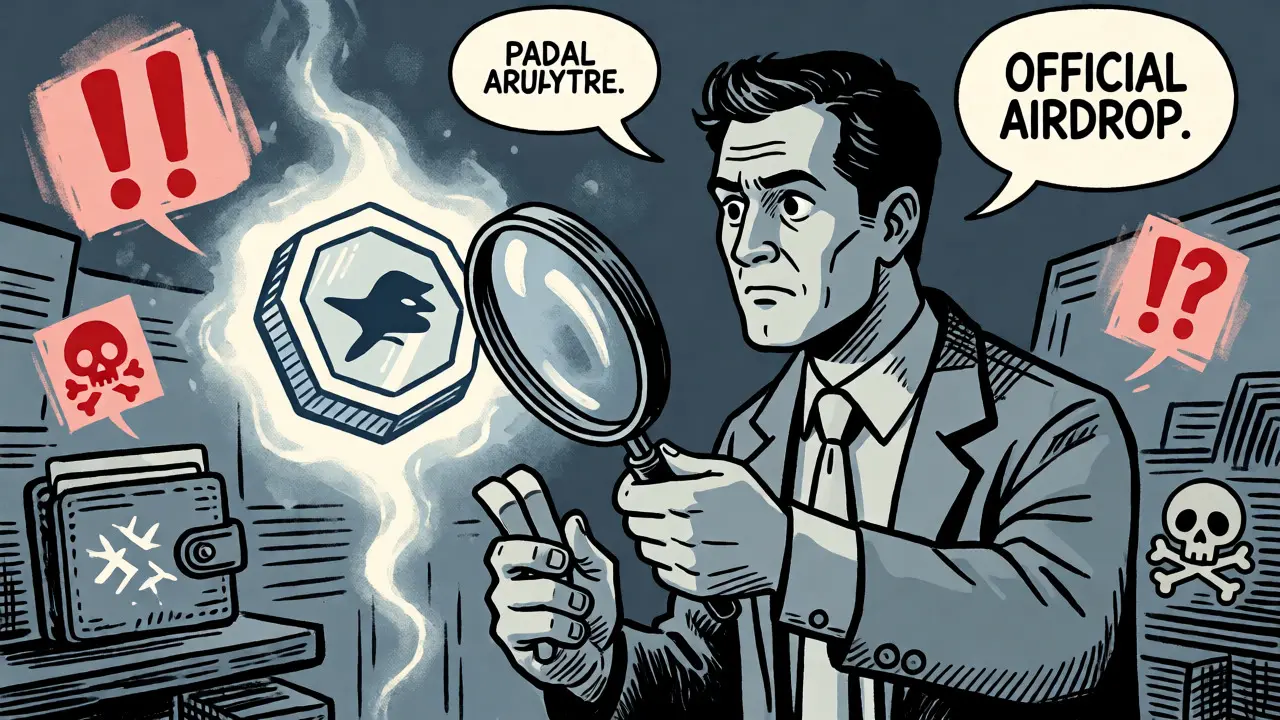
You probably clicked on this because you saw "SHREW" floating around in an airdrop list or a Telegram group promising free tokens. Maybe you’re hoping to get some quick cash for doing absolutely nothing. Here’s the cold hard truth that might save you from wasting your time: there is no official SHREW airdrop from the Shrew project. If someone is asking you to connect your wallet and sign a transaction to claim "free SHREW," be extremely careful. It’s likely a scam or a misunderstanding of what the token actually was.
The confusion stems from how most modern crypto projects launch. They drop free tokens to build hype. Shrew didn’t do that. It launched via an Initial Coin Offering (ICO) back in 2021. That means early investors paid real money-about $0.001 per token-to buy it. There was no public giveaway phase. So, if you’re hunting for a retroactive airdrop like Uniswap or Arbitrum, you’re looking at the wrong map. Let’s break down exactly what SHREW was, why people think there’s an airdrop, and whether this token has any value left in 2026.
What Was the Shrew Project?
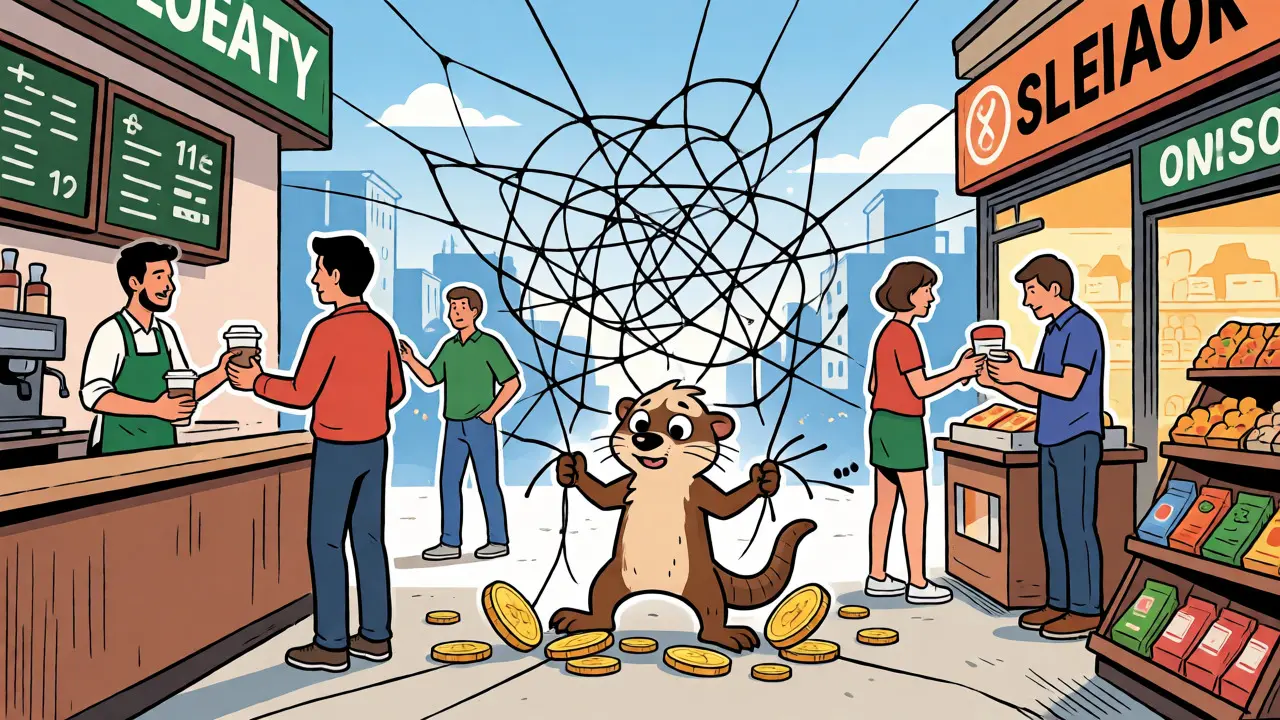
To understand why there’s no airdrop, you need to know what Shrew tried to solve. The global loyalty points market is massive-valued at over $3 trillion recently. But it’s fragmented. Your Starbucks points don’t work at Amazon, and your airline miles can’t buy you groceries. Shrew aimed to fix this by creating a universal cryptocurrency for rewards. The idea was simple: earn SHREW tokens at one store, spend them at another, regardless of location.
Shrew positioned itself as a blockchain-based solution to globalize rewards points so users could earn and spend SHREW cryptocurrency in participating retailers worldwide. The whitepaper promised deep utility, linking multiple reward programs into a single ecosystem. They even touted partnerships with tech giants like Chainlink for price feeds and hinted at integrations with Visa or Mastercard. Sounds great, right? Except none of those big-name partnerships ever materialized into a working product.
The token itself was an ERC-20 asset on Ethereum. This meant it lived on the same network as millions of other tokens, competing for attention and gas fees. Unlike newer blockchains that offer cheap transactions, using SHREW would have required paying Ethereum gas fees, which often cost more than the small reward points users were trying to consolidate. It was a technical mismatch from day one.
Why People Think There Is an Airdrop
If there was no airdrop, why are people still searching for one? Three main reasons create this fog of confusion.
- Ticker Symbol Collision: There are multiple tokens with the ticker "SHREW." One is the original Shrew loyalty token. Another is "Shiba Rewards," which shares the same symbol but operates within the Shiba Inu ecosystem. A third is "Sandshrew," a separate NFT/gaming project listed on exchanges like Bitget in 2025. Users often mix these up, assuming Sandshrew’s activity applies to Shrew.
- Generic Airdrop Hype: Crypto Twitter is obsessed with airdrops. When new projects launch, influencers shout about potential drops. Some bots or scammers scrape old project names and label them "Upcoming Airdrop" just to drive traffic to phishing sites.
- ICO Misinterpretation: Some newcomers confuse "early access" with "airdrop." Since SHREW was sold cheaply during its ICO in 2021, people assume they missed out on a free distribution. They didn’t miss a gift; they missed a sale.
It’s crucial to distinguish between an ICO and an airdrop. An ICO requires capital. An airdrop requires attention. Shrew took capital. It did not distribute free tokens to the community as a marketing tactic. According to archived DX Sale documentation from July 2021, 100% of the tokens were allocated to the fundraising round. Zero percent was reserved for a community airdrop pool.
The Reality Check: Did SHREW Ever Work?
An airdrop usually precedes or accompanies a live product. You get the token, then you use it. With SHREW, the reverse happened. The token existed, but the product never really arrived. Extensive reviews of blockchain data show no verifiable merchant adoption. By late 2022, independent analysts noted that while competitors like Rakuten had millions of users using crypto-backed points, Shrew had zero measurable user base beyond its initial buyers.
Imagine buying a ticket to a theme park, only to find the gates locked and the rides unbuilt. That was SHREW. The website became inaccessible in February 2023. Social media accounts went silent in October 2022. The GitHub repositories showed no code updates after the initial commit. Support emails bounced. If you bought SHREW thinking you’d spend it at a local coffee shop, you were likely stuck holding a digital IOU that nobody honored.
| Feature | SHREW (Shrew) | Rakuten Super Points | Brave Browser (BAT) |
|---|---|---|---|
| Launch Method | ICO (Paid) | Retail Integration | Browser Adoption |
| Airdrop? | No | N/A (Traditional) | Yes (Early Users) |
| Active Users (Peak) | Unknown/Negligible | 11 Million+ | 37 Million+ |
| Merchant Acceptance | Unverified | Widespread Retail | Ad-Supported Model |
| Current Status (2026) | Dormant/Delisted | Active | Active |
This table highlights the gap. Successful loyalty tokens either piggybacked on existing retail networks (Rakuten) or solved a different problem entirely (Brave). Shrew tried to build a network from scratch without the necessary infrastructure. Gartner’s 2023 report projected that only blockchain loyalty programs with existing retail partnerships would survive. Shrew had neither partnerships nor retail presence.
Is SHREW Worth Anything Now?
If you dug up some SHREW tokens from an old wallet, you might wonder if they’re worth selling. The short answer: probably not much. Trading volume dropped below $100 daily by mid-2023. Most centralized exchanges delisted the token in Q1 2023. It remains on a few decentralized exchanges like PancakeSwap, but liquidity is thin. You might sell it, but you’ll likely pay more in gas fees than the token’s value.
Price history shows extreme volatility followed by stagnation. The all-time high was around $0.075 in late 2022, but the all-time low was nearly identical ($0.074), indicating very little actual trading occurred at those prices. For most of its life, the market cap hovered under $8 million. Today, it’s effectively dead. Don’t expect a sudden pump due to an "announced" airdrop. Any such announcement now would likely be a community-driven rumor, not a project update.
Beware of Scams Targeting SHREW Holders
Since legitimate news about Shrew is scarce, scammers fill the vacuum. You might see ads claiming "SHREW Airdrop Live! Claim 500 Tokens." These are almost always phishing attempts. Here’s how to spot them:
- Check the Contract Address: Ensure the address matches the original ERC-20 contract from 2021. Scammers often deploy fake tokens with similar names.
- No Wallet Connect Needed: Legitimate airdrops rarely require you to connect your hardware wallet and sign a complex transaction to "claim." Often, you just send funds to a specific address or wait for automatic distribution.
- Social Media Verification: Check the official X (formerly Twitter) account. If it hasn’t posted since 2022, a sudden airdrop announcement is suspicious.
Remember, the Shrew team stopped communicating years ago. A sudden revival with a free token drop would require significant funding and development, neither of which has been reported. Treat any "SHREW airdrop" link with skepticism until proven otherwise by multiple reputable sources.
What Should You Do Instead?
If you’re interested in crypto loyalty programs, look for projects with active products. Don’t chase ghosts. Projects like Fold (acquired by PayPal) or Lolli (acquired by Block) proved that Bitcoin-backed rewards can work when integrated into major payment flows. Starbuck’s Odyssey program on Polygon also shows traction, though it’s more niche.
For SHREW specifically, consider it a lesson in due diligence. Always ask: Is there a working app? Are merchants accepting it? Is the team active? If the answers are "no," "unknown," and "silent," respectively, the token is likely speculative dust.
Did Shrew conduct an official airdrop?
No, the Shrew project did not conduct an official public airdrop. The SHREW token was distributed exclusively through an Initial Coin Offering (ICO) between May and July 2021. All tokens were sold to investors, with no allocation reserved for a community airdrop.
Is SHREW the same as Sandshrew?
No, they are different projects. SHREW is the original loyalty token from the Shrew project (launched 2021). Sandshrew is a separate entity, often associated with NFTs or gaming, mentioned in exchange listings around 2025. Confusing the two leads to incorrect assumptions about airdrops.
Can I still buy SHREW tokens?
Technically, yes, but liquidity is extremely low. SHREW is delisted from most major centralized exchanges. You may find it on decentralized exchanges like PancakeSwap, but trading volumes are negligible, making it difficult to buy or sell without significant slippage.
Why did the Shrew project fail?
The primary reason was a lack of merchant adoption. While the vision of universal loyalty points was appealing, Shrew failed to secure verifiable partnerships with retailers. Without stores accepting the token, it had no utility, leading to declining interest and eventual dormancy.
Are current SHREW airdrop claims scams?
Most likely, yes. Since the project has been inactive since late 2022, any new airdrop announcements are often phishing attempts designed to steal wallet credentials. Always verify against official channels before connecting your wallet.