AML Compliance in Crypto: What You Need to Know About Regulations, Exchanges, and Risks
When you hear AML compliance, Anti-Money Laundering rules that require crypto businesses to verify users and track suspicious activity. Also known as crypto KYC, it's the backbone of legal crypto trading worldwide. Without it, exchanges get shut down, wallets get frozen, and even legitimate airdrops disappear overnight. This isn’t theoretical—it’s happening right now. Countries like Nigeria and China have cracked down hard, banning unlicensed platforms because they didn’t follow AML rules. If you’re trading, staking, or claiming free tokens, you’re already in the middle of this system—even if you don’t see it.
AML compliance forces exchanges to collect your ID, monitor large transfers, and report anything odd. That’s why platforms like Quidax and Busha are approved in Nigeria—they follow the rules. Meanwhile, unregulated ones like BitxEX and DubiEx vanish because they skip this step. Even airdrops like the SUNI campaign or BDCC bonus aren’t just free coins—they’re tied to identity checks. If a project doesn’t ask for your email or social links, it’s either too small to care… or a scam trying to avoid detection. The same goes for mining in Venezuela. State-run operations like SUNACRIP are tightly controlled because governments know crypto can be used to move money out of the country. AML rules don’t stop innovation—they stop criminals from hiding behind it.
It’s not just about government rules. AML compliance affects how you use crypto every day. Exchange inflow and outflow data? That’s tracked because regulators want to know if big holders are cashing out. Tax loss harvesting? You need records to prove you didn’t just sell a losing coin to dodge taxes. Even dead tokens like Quotient (XQN) or PKG get flagged because their wallets might still be used for washing dirty funds. And when China seized billions in crypto assets, they didn’t just take coins—they traced every transaction back to its source. AML isn’t about privacy—it’s about accountability.
What you’ll find below isn’t just a list of articles. It’s a map of how AML compliance shapes everything in crypto—from the exchanges you use, to the airdrops you claim, to the countries where crypto thrives or dies. You’ll see how regulation turns a simple sign-up bonus into a legal minefield, why some projects die before they launch, and how global policies force even the smallest tokens to play by the rules. This isn’t boring bureaucracy. It’s the invisible force keeping your crypto from turning into a gambling den.
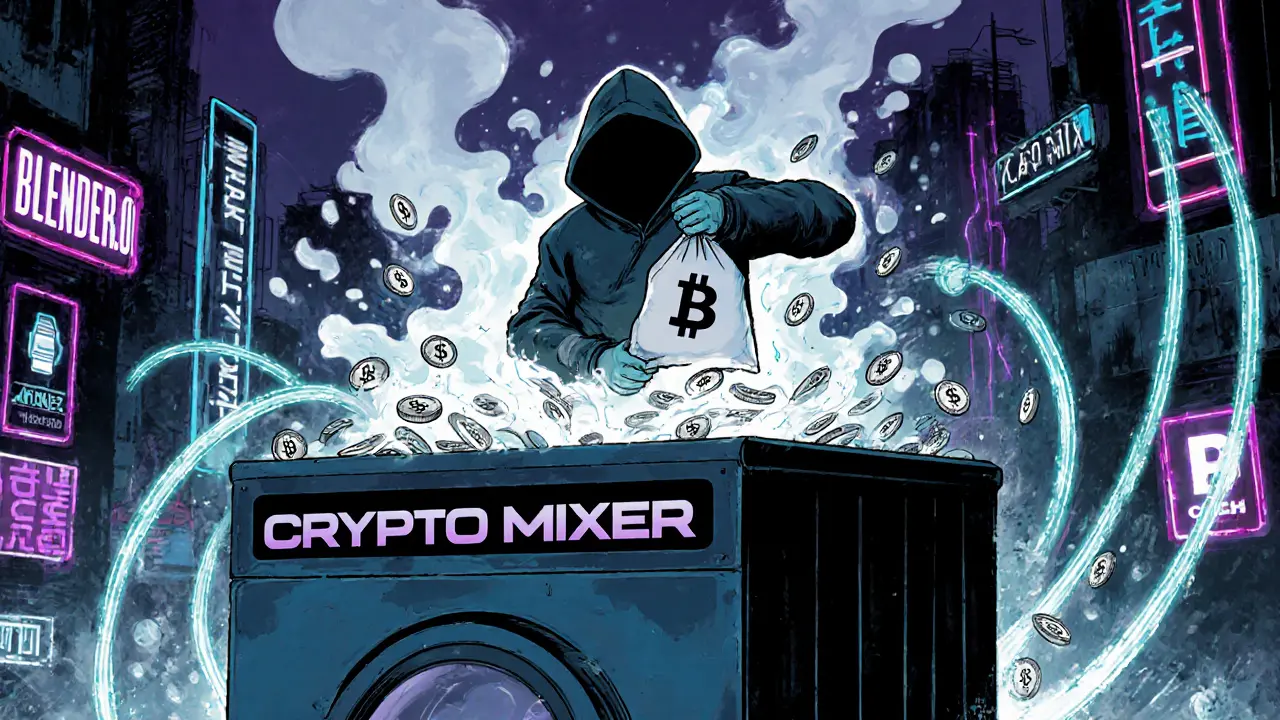
Cryptocurrency Mixing Services and North Korea Money Laundering: How Illicit Funds Hide on the Blockchain
- 8 Comments
- Aug, 8 2025
Cryptocurrency mixing services help hide the origins of stolen funds, enabling North Korea to launder billions in crypto. Learn how these tools work, why they're hard to stop, and what it means for users.