Block Header: What It Is and Why It Matters in Blockchain
When you hear about block header, the compact digital fingerprint at the top of every block in a blockchain that contains metadata like timestamp, previous block hash, and nonce. It's not just a technical detail—it's what makes the whole system trustworthy. Without a block header, there’s no way to link one block to the next, no way to prove a transaction happened, and no way to stop someone from faking history. Every Bitcoin, Ethereum, and even lesser-known chain depends on this tiny piece of data to stay secure.
The block header doesn’t store the actual transactions—that’s the block body’s job. Instead, it holds the proof that those transactions are real. It includes the Merkle root, a single hash that summarizes all transactions in the block, making it easy to verify without downloading every single one, the previous block hash, which chains each block to the one before it, creating an unbreakable sequence, and the nonce, a random number miners tweak to solve the cryptographic puzzle and add the block. Together, these elements form a tamper-proof record. If even one transaction changes, the Merkle root changes. That breaks the chain. And that’s why hackers can’t just edit old blocks.
Miners don’t just guess random numbers—they’re racing to solve a puzzle based on the block header. That’s why mining pools, like those listed in our posts, focus so heavily on optimizing header processing. The faster you can compute headers, the higher your chances of winning the next block reward. And it’s not just Bitcoin. Even newer chains like Core Chain or Algorand rely on similar structures, though they tweak the rules for speed or energy use. The block header is the silent engine behind every crypto transaction, whether you’re trading DOGE, staking ALGO, or checking if a new airdrop is legit.
When you see a post about exchange inflows, crypto seizures, or a dead token like PKG, you’re seeing the results of what happens at the block header level. If a chain’s header validation fails, the whole network stalls. If miners stop securing it, the chain becomes vulnerable. That’s why Venezuela’s state-run mining or China’s crypto ban had such a big impact—they didn’t just ban coins, they disrupted the entire block header pipeline. And when institutions start buying Bitcoin ETFs, they’re not just betting on price—they’re betting that the block header system will keep working for decades.
What you’ll find below isn’t just a list of articles. It’s a collection of real stories where the block header plays a hidden but vital role—from how mining pools compete, to why some exchanges get hacked, to why certain tokens vanish overnight. These aren’t abstract ideas. They’re the mechanics behind the crypto world you use every day. And if you understand the block header, you’ll never look at a transaction the same way again.
Block Headers vs Block Body in Blockchain: What They Do and Why It Matters
- 9 Comments
- Dec, 5 2024
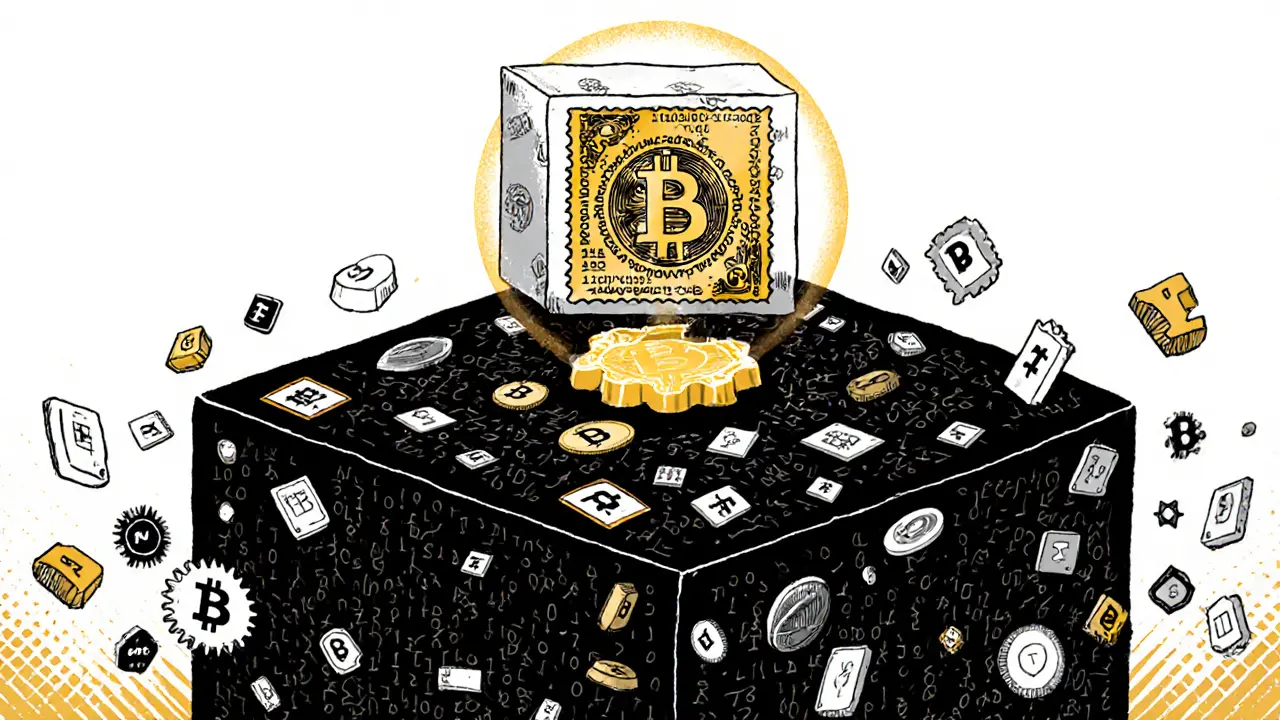
Block headers keep blockchain chains secure with cryptographic links, while block bodies store transactions and data. Understanding this split is key to grasping how Bitcoin, Ethereum, and other blockchains work.