Russian Crypto Regulations: What's Allowed, Banned, and How It Affects You
When it comes to Russian crypto regulations, the official stance from the Russian government on digital assets is a mix of restrictions, controlled experimentation, and quiet tolerance. Also known as crypto laws in Russia, these rules don’t outright ban ownership—but they make it hard to use crypto like money, trade freely, or mine without government eyes on you. Unlike China’s total crackdown or El Salvador’s bold embrace, Russia walks a tightrope: it wants to control crypto without losing the tech edge it’s gained.
The Central Bank of Russia, the country’s main financial authority, has spent years pushing back against crypto as a payment tool, calling it a threat to financial stability. Also known as CBR, it has blocked banks from handling crypto transactions and warned citizens that using Bitcoin or Ethereum to pay for goods could land you in legal trouble. At the same time, Russia quietly lets crypto mining continue—especially in regions with cheap power like Siberia—because it brings in foreign currency and keeps hardware running. The government even started taxing mining profits in 2024, treating it like a business, not a hobby.
Then there’s the crypto taxation Russia system, a framework that forces users to report crypto gains as income, with rates up to 13% for individuals and higher for businesses. Also known as digital asset tax rules, this isn’t just paperwork—it’s enforcement. The tax service now cross-checks exchange data with bank records, and if you didn’t declare your $10,000 ETH sale, you could face fines or worse. Mining rigs are still running, but many operators now register as legal entities to avoid being labeled as illegal operators. Meanwhile, ordinary users who hold crypto in wallets are mostly left alone—unless they try to cash out through a bank or use it to buy something abroad.
What you won’t find in Russia? Legit crypto exchanges. The government shut down local platforms like Binance’s Russian branch and blocked access to foreign ones. Even peer-to-peer trading is risky—some buyers have been arrested for selling crypto to people who later used it for sanctions evasion. And while the state is developing its own digital ruble, it’s not meant to compete with Bitcoin—it’s meant to replace it.
So where does that leave you? If you’re in Russia, holding crypto is still possible—but spending it, trading it, or mining it at scale comes with strings attached. You can’t use it to dodge sanctions. You can’t move money out easily. And if you’re mining, you better be ready to pay taxes, report your hardware, and hope the power grid doesn’t cut out. The rules aren’t clear-cut, but one thing is: the state wants control, not chaos.
Below, you’ll find real stories and breakdowns from people navigating this gray zone—from miners hiding in remote towns to traders using P2P apps to survive inflation. Some posts expose scams pretending to be legal. Others show how crypto is quietly becoming a lifeline, even under pressure. No fluff. Just what’s happening on the ground in Russia right now.
Are Crypto Payments Allowed in Russia? What You Need to Know in 2025
- 6 Comments
- Dec, 13 2024
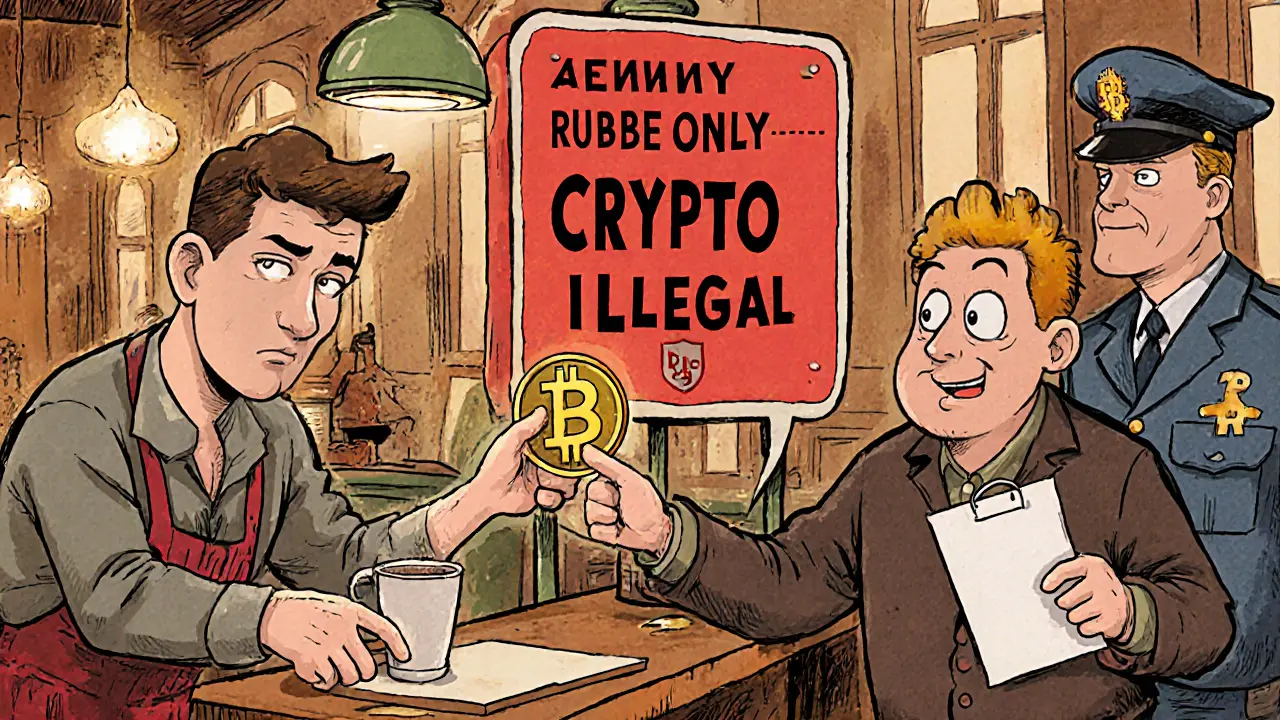
As of 2025, Russia bans cryptocurrency payments for domestic transactions but allows limited use in international trade under strict rules. Fines up to 1 million rubles and asset seizures apply for violations.